
Bali “ Land of The Gods”
Bali, also referred to as the “Land of the Gods,” is captivated by the pristine natural beauty of its verdant terraced rice fields and looming volcanoes, which emanate a sense of tranquility and tranquility. It is also renowned for its surfers’ sanctuary. Bali captivates visitors with its vibrant ceremonies and dramatic dances, as well as its exquisite arts and crafts, opulent beach resorts, and thrilling nightlife. Temples with intricate carvings are ubiquitous.
In Bali, there are thousands of gift stores. There are numerous items that you may wish to transport back with you from Denpasar to Ubud. The signature souvenirs of Bali encompass a variety of delectable snacks and beverages, as well as immaculate handcrafted items such as Tenun Bali.
If you are contemplating purchasing mementos to take home, the souvenir market at Sukowati is the most suitable option, as the selection may be overwhelming.
The majority of the hotels that have been awarded a star are situated in close proximity to the shore. Some even have their own private areas at specific beaches, where they can indulge in exclusive privileges. They are readily accessible in well-known locations such as Kuta, Sanur, and Seminyak.
Kuta boasts an extensive selection of boutiques and stores that offer a wide range of items, including surfwear, flip-flops, bright T-shirts, and unique trinkets. Bali coffee is the most aromatic option for purchasing preserved foods. Additionally, you may wish to acquire aromatherapy essential oils for the purpose of sprinkling them into your bath.
- Garuda Wisnu Kencana
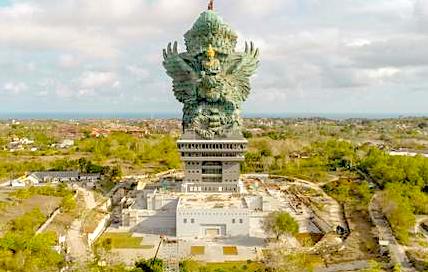
image source : traverse
GWK Cultural Park features some of the most iconic cultural landmarks in Bali, including the magnificent Garuda Wisnu Kencana statue, which stands tall at 121 meters and represents the Hindu god Vishnu and his mount, the Garuda bird.GWK park offers a variety of cultural activities and performances, such as the Kecak Garuda Wisnu dance, traditional Balinese music, and dance performances, among others.Regardless of whether we are passionate about history, captivated by art, or just seeking an enjoyable and distinctive experience in Bali, GWK Cultural Park offers something for all. We encourage you to visit our website and uncover everything our park has in store for you.
In Hindu mythology, Garuda is depicted as a divine bird and serves as the mount of Lord Vishnu. The bird is thought to possess the power to alter its size and shape at will, and is highly esteemed for its strength and speed. The tale of Garuda and Vishnu stands out as one of the most celebrated narratives in Hindu mythology, inspiring a multitude of artistic and literary creations. The concept behind the Garuda Wisnu Kencana sculpture draws from this myth and aims to represent Indonesia’s vibrant cultural heritage and its ties to Hinduism. - Mount Agung

image source : seek sophie
Gunung Agung, or Mount Agung, is the island’s highest mountain and is situated in the Karangasem district. It stands majestically on the eastern seaboard of Bali. The climate of the region is influenced by Mt. Agung, which has a summit elevation of 3,142 meters above sea level. The west side of the mountain is lush and fruitful due to the rain clouds that are captured by its western slopes, while the eastern slopes remain dry and barren.The Balinese regard Mt. Agung as the sacrosanct abode of the gods. Consequently, the volcano is held in high regard. The matriarch of all temples in Bali, Pura Besakih, is situated on this mountain. Before reaching the main portal, one must ascend hundreds of stairs upon entering the temple. However, women who are carrying heavy masses of offerings on their heads are able to access the temple more easily by using alternative staircases that require less effort to ascend.The most ideal time to visit Besakih is during the Galungan celebrations, when the temple and entrance are exquisitely adorned with tall bamboo poles, coconut leaves, and flowers. Hundreds of women, dressed in their finest white attire, gracefully carry piles of colorful fruits and flowers on their heads. In the temple’s backdrop, Mt. Agung stands towering and protective. This is a spectacle that will never be forgotten.
Despite the fact that Mt. Agung is a symbol of tranquility and peace, it was violently erupted on 17 March 1963 after a century of dormancy. The eruption resulted in the release of ash and volcanic materials that reached a height of 8 to 10 kilometers in the air, while pyroclastic clouds cascaded down the mountain’s flanks. On that day, more than one thousand individuals lost their lives. For months, the entire region, from Kintamani to the adjacent area, was enveloped in a thick layer of dark grey ash. However, it was unexpected that the ash brought fertility, and the volcanic material grew enormous sweet potatoes.
However, the landscape has since returned to its former state of fertility and greenery, and Mt. Agung has become a formidable mountain to ascend. The trail directly adjacent to Pura Besakih is the steepest and most challenging of the two that trekkers may pursue.
The second is along the southern peak, commencing at Pura Pasir Agung. Once one ascends to the summit, they are treated to an extraordinary panorama of Bali and the island of Lombok, which boasts its own volcanic peak, Mt. Rinjani, to the east.
- Seminyak
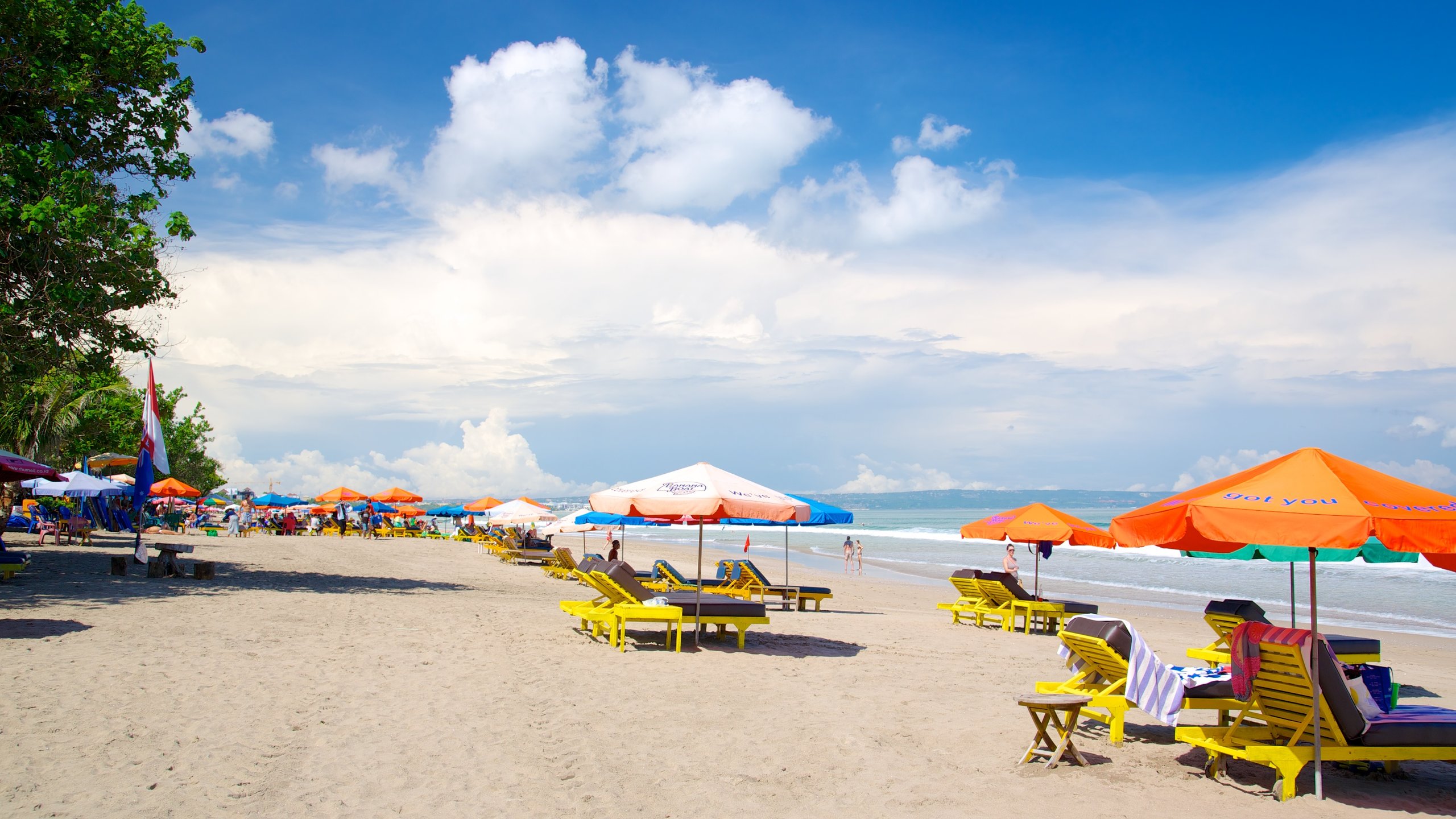
image source : expedia
An upscale coastal enclave located just north of Legian and Kuta, Seminyak is Bali’s emerging fashion, culinary, and accommodation district. From Double Six Street in the south, Seminyak extends approximately 10 kilometers from Denpasar, the capital city of Bali, and transitions into the villages of Kerobokan and Umalas to the north of Petitenget Temple. While it may be challenging to determine the exact boundaries of Kuta, Legian, and Seminyak, one thing is certain: Seminyak is undoubtedly a unique entity. In contrast to Kuta, the atmosphere is considerably more sophisticated and relaxed, and the shoreline is particularly tranquil during the day.Seminyak is also an excellent starting point for those who intend to explore Bali’s cultural treasures and lush landscapes, including the breathtaking rice terraces that extend as far as the eye can see, as well as Uluwatu Temple in the south and Tanah Lot Temple in the north. Additionally, Seminyak boasts an abundance of high-end resorts and budget lodgings, eliminating the need to search for the ideal lodging. It goes without saying that it is the quintessential Balinese vacation.Seminyak is situated within the primary west coast conurbation of South Bali, and traffic can become exceedingly congested at times. The simplest method of traveling from Ngurah Rai International Airport is to begin in Kuta or Legian. Legian Street parallels the shoreline and continues as Seminyak Street at its western terminus. Seminyak can also be reached by taking the eastern bypass of Sunset Street. Despite the fact that it is a longer distance, this is almost always the quickest route from Kuta and Legian to Seminyak.
- Kuta Beach
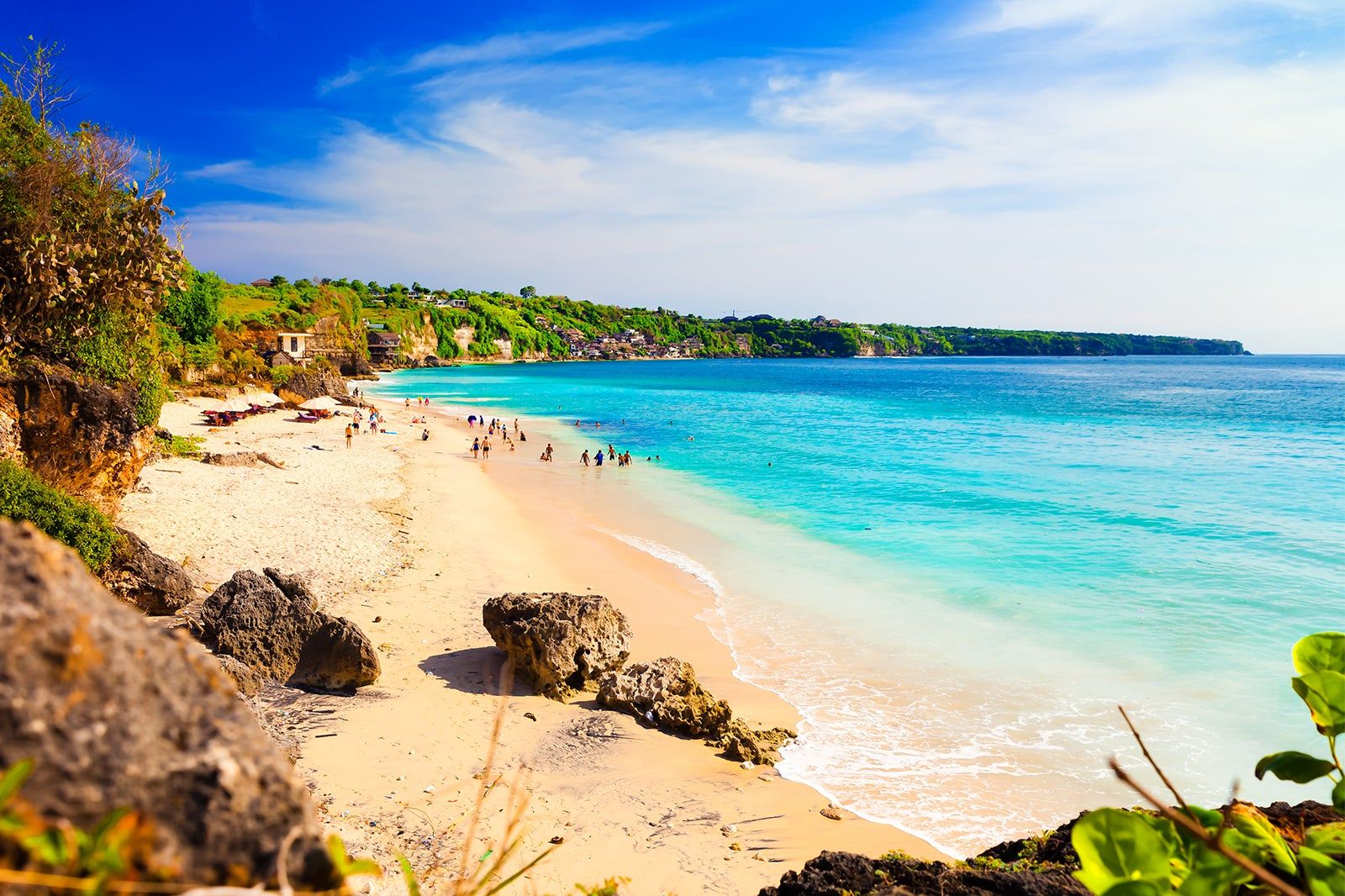
image source : hotels.com
Kuta, formerly a tranquil village with a peaceful, picturesque beach, has evolved into a thriving beach destination, attracting tourists from around the globe who enjoy swimming, surfing, or sunbathing by the shore. Other individuals, who are leisurely attired in flip-flops, T-shirts, and shorts, stroll along the main road, either shopping or dining at one of the numerous open-air restaurants. When you arrive in Kuta, you are aware that you are in a vacation destination, and the local populace is in a festive mood.In the 1960s, the Kuta Beach Hotel was the sole hotel in the area. However, without any significant planning, Kuta quickly evolved into a popular destination for backpackers and surfers, while the high-end market opted to remain in the more tranquil Sanur village on the opposite side of the peninsula. Kuta’s popularity increased over time, and a variety of establishments, including hotels, restaurants, and discos, arose along the main road from Kuta to Legian. These establishments catered to the growing holiday crowd, which included both international tourists and domestic visitors from Jakarta and other major cities. The properties ranged from basic to luxurious.
- Kintamani

image source : wikipedia
Both domestic and international travelers to Bali have traditionally included a visit to Kintamani in their itineraries. Escape the hustle and bustle of Kuta, Legian, Seminyak, and Petitenget to experience a serene environment, refreshing mountain climate, and breathtaking landscapes.One of the primary points of interest in Kintamani is the volcanic Mount Batur, which is approximately three hours away from the more tourist-oriented central areas of Bali. Consequently, it is advisable to incorporate additional destinations into your itinerary.The Kintamani district, which is located in the Bangli region, is home to a number of intriguing locations that should be included in your itinerary. The village of Penglipuran is situated in a hilly countryside and is delightfully well-maintained. It is characterized by wide, brick roadways that are flanked by rows of charming, antique houses, with meticulously maintained gardens in between. The village is a traditional community that adheres to the traditional methods of bamboo architecture. In this bamboo town, the plant is used to construct nearly every aspect of the environment, including kitchens, majestic gates and doorways, furniture, roofs, and gates. Many of the designs and creations, such as the bamboo roof shingles, are exclusive to the small town and cannot be found elsewhere. Typically, visitors to Penglipuran are provided with a sample of the renowned Bali Coffee.
In terms of coffee, there is a plethora of sights and flavors to experience on the journey to Kintamani. Stop by Okyna Kopi & Rempah-Rempah (Okyna Coffee and Spices), which is situated along the primary road to Kintamani. The coffee house is surrounded by a generously sized parking field that can accommodate numerous tour buses, automobiles, and motorcycles.
- Ubud

image source : lonely planet
The central region of Bali Island is home to the verdant landscape of Ubud. The Balinese word Ubad, which translates to “medicine,” is the source of the name Ubud. This name was inspired by the profusion of medicinal plants and herbs in the region.Ubud is the ideal destination for those seeking tranquility and tranquility.Ubud, a city that is steeped in culture and complemented by breathtaking vistas, provides a welcome escape from the monotony of your hectic life. Ubud was once a small village; however, it has since evolved into a cosmopolitan community that is both flourishing and relaxed.
Visitors are cared for both physically and spiritually in Ubud. The senses will be delighted and soothed by the fine dining restaurants and resorts in this area. A stroll through the verdant paddy fields, where women gracefully balance piles of fruit offerings as they make their way to the temple, leaves an enduring impression and is truly breathtaking.
- Sanur
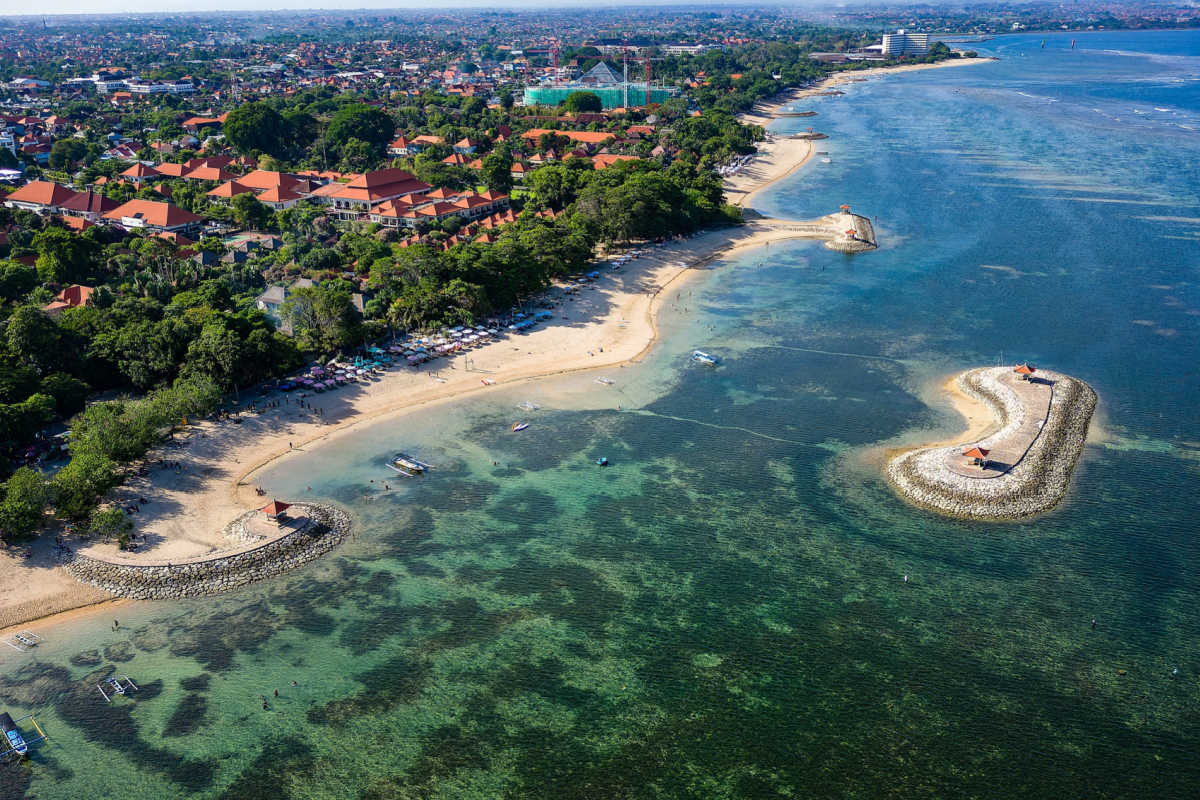
image source : The Bali Sun
The lagoons of Sanur are large, shallow, and safe, and are protected by a long string of offshore reefs. They are perfectly clear and ideal for swimming, snorkeling, and a variety of water activities. Although the reefs around Sanur can be extremely shallow at low tide, they generate some of the best waves in the world when the conditions are favorable. Surfers will be delighted to learn this. However, there are more consistent swells that are suitable for surfing beyond the reefs.Visitors who wish to dive and investigate the beauty of the adjacent island of Nusa Lembongan may also embark from Sanur. Nusa Lembongan is one of three neighboring islands, the other two being the much larger Nusa Penida and the diminutive Nusa Ceningan. Its area is approximately 8 square kilometers.There are numerous locations on the island that are ideal for diving and snorkeling, as they are characterized by a plethora of marine life and robust corals. The waves are excellent, but surfing can become quite crowded. There are numerous white-sand beaches that are situated far from the primary urban areas and are rarely congested.Sanur boasts several of Bali’s most historic hotels, as it was the site of Bali’s initial tourism boom. Numerous cafés and restaurants are situated along the coastline. The Pasar Malam (Night Market) located at the northern end of Jalan Danau Tamblingan, where it intersects with Jalan Pungutan, may be an option for those seeking affordable meals.
The paved beachfront cycle-path in Sanur is spectacular, extending approximately 5 km from the Jalan Mertasari area in southern Sanur to the main beach at Jalan Hangtuah in the north. This results in a delightful scenic bike excursion, particularly in the early morning. The more energetic individuals may participate in one or more of the numerous watersports that are available at Sanur Beach. Consider kitesurfing, windsurfing, wakeboarding, surfing, or paragliding.
For those who are less active, renting a banana boat and exploring the tranquil waters is an option. The surf in this location is not exceptional by Bali’s standards; however, there are acceptable swells located approximately one kilometer offshore during the northwest wind season, which spans from October to March. During that time, it will be effortless to locate the breaks; simply follow the residents. Boards are available for rent at the shore for Rp 100,000.
For a unique experience, consider the Sea Walker. An underwater adventure that is both thrilling and secure Sea Walker is a distinctive diving system that enables individuals to observe the underwater world to a depth of 15 feet without the need for certification or to get their hair damp. While numerous exotic fish and marine life are present, participants actually walk along the bottom of the sea, rather than swimming.
- Nusa Dua
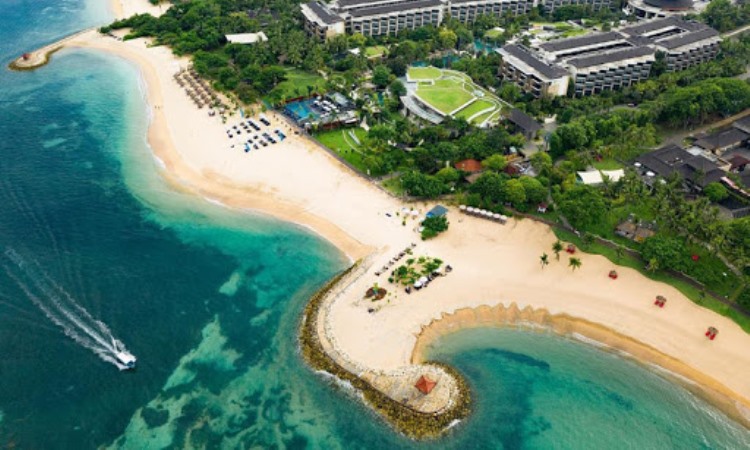
image source : love bali
Nusa Dua is located approximately 40 kilometers from Denpasar, the capital of Bali province. Nusa Dua is a sprawling, prestigious enclave of international luxury hotels, deluxe spas, exclusive golf courses, and world-class convention centers. It was intentionally constructed to showcase the island’s beauty in an opulent, exclusive setting, and to serve as an ideal integrated venue for international conventions and exhibitions.Nusa Dua’s pearly soft white powdery beaches and crystal-clear shallow waters make it an ideal destination for families or fatigued conference delegates to unwind, swim, and return feeling completely rejuvenated and re-inspired. ‘Two Islands’ is the literal translation of the name Nusa Dua, which denotes the two tiny raised headlands or islands that are situated just off the coast of the peninsula. Nusa Dharma, a Hindu shrine (Pura) constructed in 1948 by Tan Sie Yong, a Chinese national, is situated on one of the islands. - Uluwatu
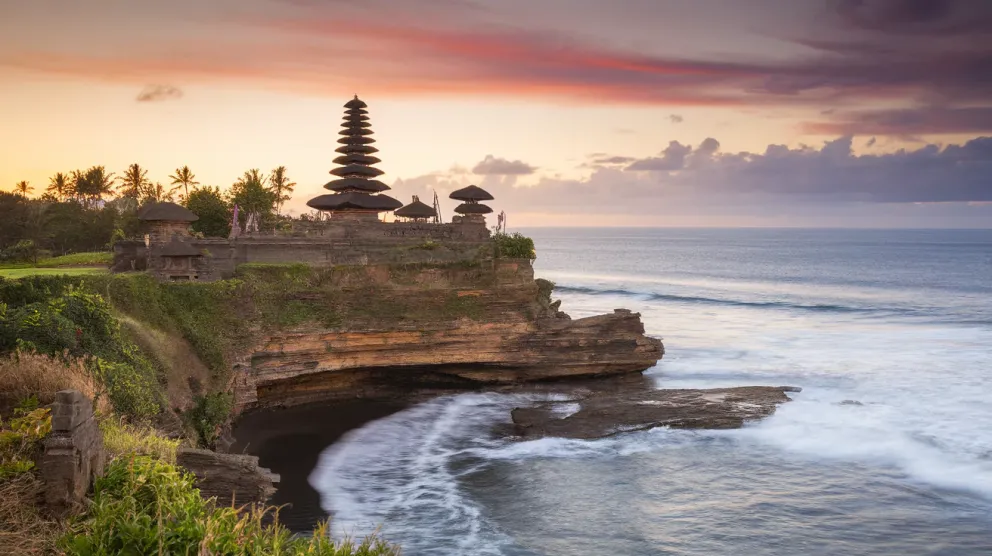
image source : Onaya Bali Resort
The most renowned swells in Bali are located in Uluwatu. The location provides a variety of waves that are influenced by varying surges and tides. The Peak is most enjoyable during mid- and high tides, and it is closed during low tide. Fronting the grotto, it is the most consistent. The racetrack is located 100 meters away and features a fast wave, as well as numerous sections with simple tubes. The optimal conditions are at low tide and at a depth of 6 feet, which can accommodate a larger surge. ‘The Peak’ establishes a connection with ‘Racetraks’ during the appropriate tide and surge.Uluwatu is home to a variety of restaurants and cafés, ranging from budget-friendly food stalls to high-end establishments. Naturally, the souvenirs that are sold in this area are associated with the marine, including corals and seashells. However, there are also contemporary products, such as T-shirts. There are numerous lodging options, including motels, hotels, villas, and warungs (traditional cafes). Better accommodations, such as starred hotels, are situated in close proximity to resorts, while warungs require only payment for meals. - Tanah Lot
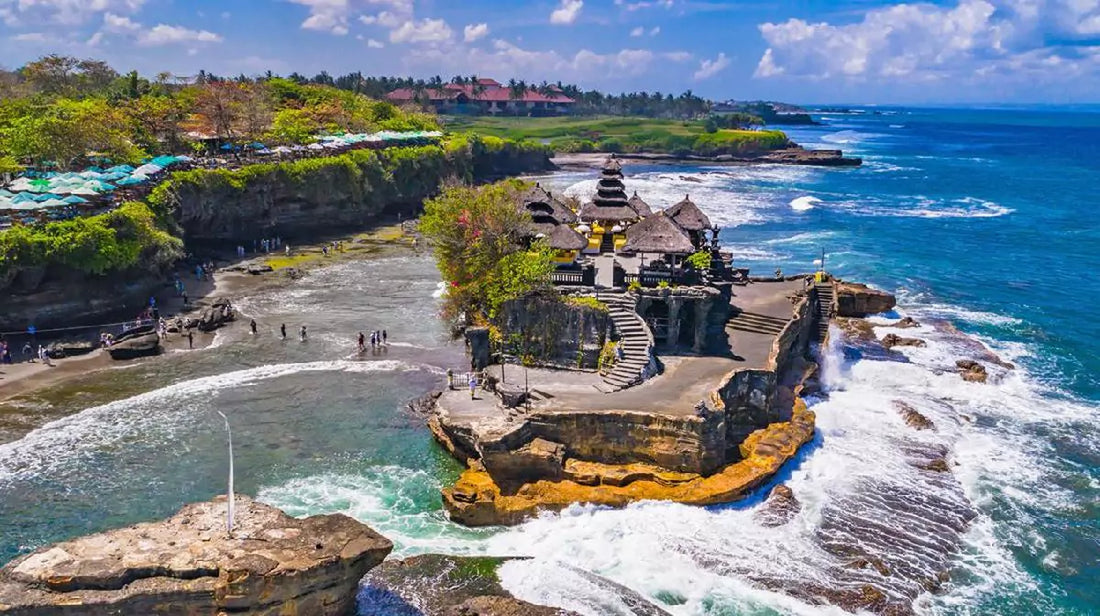
image source : torch.id
Tanah Lot is the quintessential representation of Bali’s romanticism for numerous individuals. Tanah Lot, which translates to “Land in The Sea,” is an apt moniker for the distinctive offshore landscapes. One of Bali’s most recognizable landmarks is the silhouette of Pura Tanah Lot.Consider the image of a Balinese temple (pura) situated atop a rock, with its back to the vast ocean. The crashing waves below and the dramatic colors of the twilight sky serve as the backdrop, illuminated by the sun’s gradual waning. Tanah Lot is situated in Tabanan, a mere 30 kilometers from Denpasar. The temple is situated approximately 300 meters offshore. Dang Hyang Nirartha, a revered religious figure in Bali, believed that the history of Tanah Lot temple dates back to the 16th century.It was alleged that Dang Hyang Nirartha was responsible for the establishment of a three-temple system in Balinese villages. The temple would be constructed in the northern region of the village for Brahma, in the middle area for Vishnu, and on the southern side for Shiva, according to the site plan. He observed the diminutive rock island while traveling along the southern coast of Bali and resolved to spend the night there. The rock in Beraban village was referred to as Gili Beo, which translates to “bird-shaped rock.” Subsequently, he experienced a sense of enlightenment, realizing that this was a sacred location upon which to construct a shrine. Nirartha was ordered to be expelled from Gili Beo by the leader of Beraban, who was enraged.Dang Hyang Nirartha was a man of great preternatural power in Balinese mythology. Consequently, he relocated the entire granite island to the sea, constructed a temple, and christened it Tanah Lot. The entire Beraban village was taken aback and subsequently joined him in his convictions. The purpose of the Tanah Lot temple was to venerate Bhatara Segara, also known as the sea God. He fashioned a poisonous serpent from his sash in order to safeguard the temple with his immense power. It is believed that the sea serpent resides at the base of this rocky island in order to protect the temple from malevolent intruders.
Currently, Tanah Lot is one of the most frequently photographed sea temples in Bali. At the entrance to the temple, visitors will find numerous art stores that sell local handicrafts and other signature local products.
Odalan, which is observed every 210 days, is the optimal period to visit Tanah Lot. The rituals typically occur in the vicinity of the Galungan and Kuningan festivities on the sacred day known as Buddha Cemeng Langkir. On this day, you will observe aisles of Balinese women carrying offerings on their heads as they pray at the temple of Tanah Lot. The tourist area of Tanah Lot, which is situated near the rock, is meticulously maintained for the convenience of visitors. It is equipped with a parking area, restrooms, art shops, restaurants, a hotel, an open stage, a tourist information center, and security and safety services.
There are numerous restaurants in this area that offer a delectable brunch or lunch, all while taking in the breathtaking scenery. Witness the tranquility of the tropical sun as it gradually recedes beyond the horizon and into the vast expanse of the ocean, an unforgettable experience that will remain with you for the rest of your life.
- West Bali National Park

image source : Authentic Indonesia
At the western end of the fabled island of Bali, the West Bali National Park offers a plethora of pristine beaches, crystal-clear blue water, picturesque mountain ranges, and verdant green forests. The national park is most renowned for its sanctuary of the exotic white Bali Starling, an endemic emblematic bird of the island of the gods, and is home to over a hundred species of wildlife.The national park, which is situated at the most northerly point of Bali, encompasses the entire Prapat Agung Peninsula and extensive landmasses surrounding the cities of Gilimanuk, Cekik, and Banyuwedang, which are situated in the regencies of Jembrana and Buleleng. This national park is situated approximately 100 kilometers from Denpasar, the capital city of Bali, or 50 kilometers to the west of Singaraja, the northern city and capital of Buleleng regency.The entire area of West Bali National Park is 19,002.89 hectares, with 15,587.89 hectares of land and 3,415 hectares of water. The habitat is highly diverse, encompassing lowland forests, acacia scrubs, dry savannas, and rainforests, as well as more montane forests in the upper region. Additionally, there are isolated areas of dense mangrove forests. In the northern region of the park, there is a readily apparent peninsula that extends to the north, known as Prapat Agung. Long stretches of protected coastline and offshore coral reefs, as well as a small offshore island named Menjangan, surround this peninsula. The latter is a highly sought-after diving destination.The park has documented one hundred and sixty bird species, including the Bali Starling (Leucopsar rothschildi), the fauna icon of Bali and the only endemic vertebrate species in Bali. It served as the primary rationale for the establishment of this national park in 1941. In 2001, it was estimated that only six individual starlings had survived in the open, all of which were located in this park. Since that time, captive breeding and reintroduction initiatives have persisted at a rapid pace; however, poaching pressures continue to be a significant issue. In 2004 a second re-introduction program was initiated in the desolate regions of Nusa Penida, which are located off the coast of Sanur Beach, with this in mind. West Bali National Park received 60 endangered Bali Starlings for release in June 2011. The Surabaya Zoo provided 40 and Taman Safari Indonesia provided 20 of the birds. A inventory of probable species and their status is available for avid birdwatchers.
The National Park is home to a variety of fauna, including the Wild Bull (Banteng), Barn Swallow, Black-naped Oriole, Black Racket-tailed Treepie, Crested Serpent-eagle, Crested Treeswift, Dollarbird, Hawksbill Turtle, Indian Muntjac, Java Sparrow, Javan macaque (Lutung), Large Flying Fox, Leopard Cat, Lesser Adjutant, and Long-tailed Shrike. Pacific Swallow, Red-rumped Swallow, Milky Stork, and Menjangan Wild deer, Sacred Kingfisher, Savanna Nightjar, Stork-billed Kingfisher, Water Monitor, Wild Boar, Yellow-vented Bulbul, and numerous other species are present.
The national park is also the habitat of numerous endangered species of flora, including: Pterospermum diversifolium, Antidesma bunius, Lagerstroemia speciosa, Steleochocarpus burahol, Santalum album, Aleuritas moluccana, Sterculia foetida, Schleichera oleosa, Dipterocarpus hasseltii, Garcinia dulcis, Alstonia scholaris, Manilkara kauki, Dalbergia latifolia, and Cassia fistula.
In the bay of Gilimanuk, on the island of Menjangan, and the exceptional coral reefs that encircle it, the marine reserve encompasses the cape shores and numerous sanctuary islands, which are home to a plethora of seabirds. The northern shores of Menjangan boast notably magnificent reefs that surpass the excellent drop-offs on the south side. Locals and visitors alike flock to the island to explore the coral reef and observe a diverse array of fish. There are no hazardous currents to navigate in this region.
In a relatively limited marine area, West Bali Barat National Park also exhibits a high level of biodiversity. In a relatively small area of only 2 hectares, 110 species of corals belonging to 18 families were recorded at the end of the last century. Of these, 22 species were of the mushroom coral family, which is a limited number of 29 species worldwide. Additionally, at least 27 species of Acropora coral were found.
West Bali National Park is a natural treasure of the fabled island of Bali, with all the splendors that extend from the center of its thick jungle to the deep waters that surround the peninsula.
- Tegalalang Rice
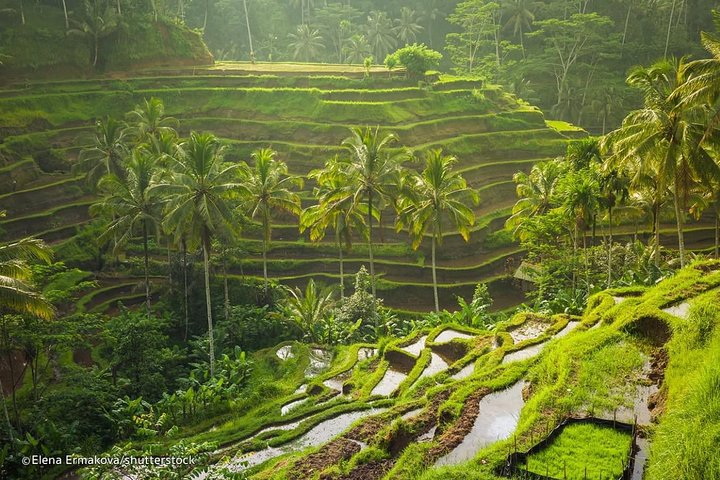
image source : tiket.com
Ubud is renowned among international travelers as the greenest region of Bali due to its abundance of tourist attractions that feature lush forests, ridge walks, and paddy terraces. Tegallalang Rice Fields are among the most renowned green attractions in the area. It is also referred to as the Tegallalang Rice Terrace, a collection of meticulously organized terraces that adhere to the traditional Balinese irrigation system, or “subak.” According to tradition, the system was transmitted by a sage named Rsi Markandeya in the 8th century.The Tegallalang Rice Fields are located in a valley that provides breathtaking views of the terraces and the adjacent green landscape. Tegallalang Rice Fields, in conjunction with those in the communities of Pejeng and Campuhan, comprise the three most breathtaking terraced landscapes in the Ubud region.This location has become increasingly popular among international travelers since it was designated as a UNESCO World Heritage Site. Although it is a peaceful and tranquil environment, it remains an excellent location to unwind and calm the mind.Although Tegalalang Rice Terrace is situated only a brief 20-minute drive north of Ubud, those who prefer to walk can complete the two-hour journey on foot. It is comparatively straightforward to access, particularly if you opt to use a motorcycle or rented car. You may also travel there by transportation. There are numerous options available to you, each of which provides unique experiences that are equally convenient.
- The Mother Temple of Besakih

image source : Kuta Transport
Besakih Temple (Balinese: ᬧᬸᬭᬩᭂᬲᬓᬶᬄ) is a pura complex located in the village of Besakih, on the foothills of Mount Agung in eastern Bali, Indonesia. [1] It is the most significant, largest, and sacred temple in Balinese Hinduism, and is one of a series of Balinese temples. An extensive compound of 23 separate but related temples, the largest and most significant of which is Pura Penataran Agung, is situated nearly 1000 meters up the side of Gunung Agung. The temple is constructed on six levels, which are terraced up the slope. The candi bentar (divided gateway) serves as the entrance, while the Kori Agung, which is situated beyond it, serves as the gateway to the second courtyard.The temple’s precise origins are uncertain; however, its significance as a sacred site is almost certain to have originated in prehistoric times. The stone bases of Pura Penataran Agung and numerous other temples are reminiscent of megalithic stepped pyramids, which have been in existence for at least 2,000 years.The initial Javanese conquerors settled in Bali in 1284, and it was undoubtedly utilized as a Hindu place of worship. Besakih had evolved into a state temple of the influential Gelgel dynasty by the 15th century.Pura Besakih is a complex comprised of twenty-three temples that are situated on parallel ridges. It contains stepped terraces and flights of stairs that ascend to numerous courtyards and masonry gateways, which in turn lead to the primary spire or Meru structure, known as Pura Penataran Agung. The spiritual individual is directed upward and closer to the sacred mountain by the alignment of all of this along a singular axis.[four]The primary sanctuary of the complex is the Pura Penataran Agung. The lotus throne, or padmasana, is the symbolic focal point of the primary sanctuary and, as such, serves as the ritual center of the entire complex. It is believed to have been constructed in the seventeenth century.Five
- Temple of Tirta Empul
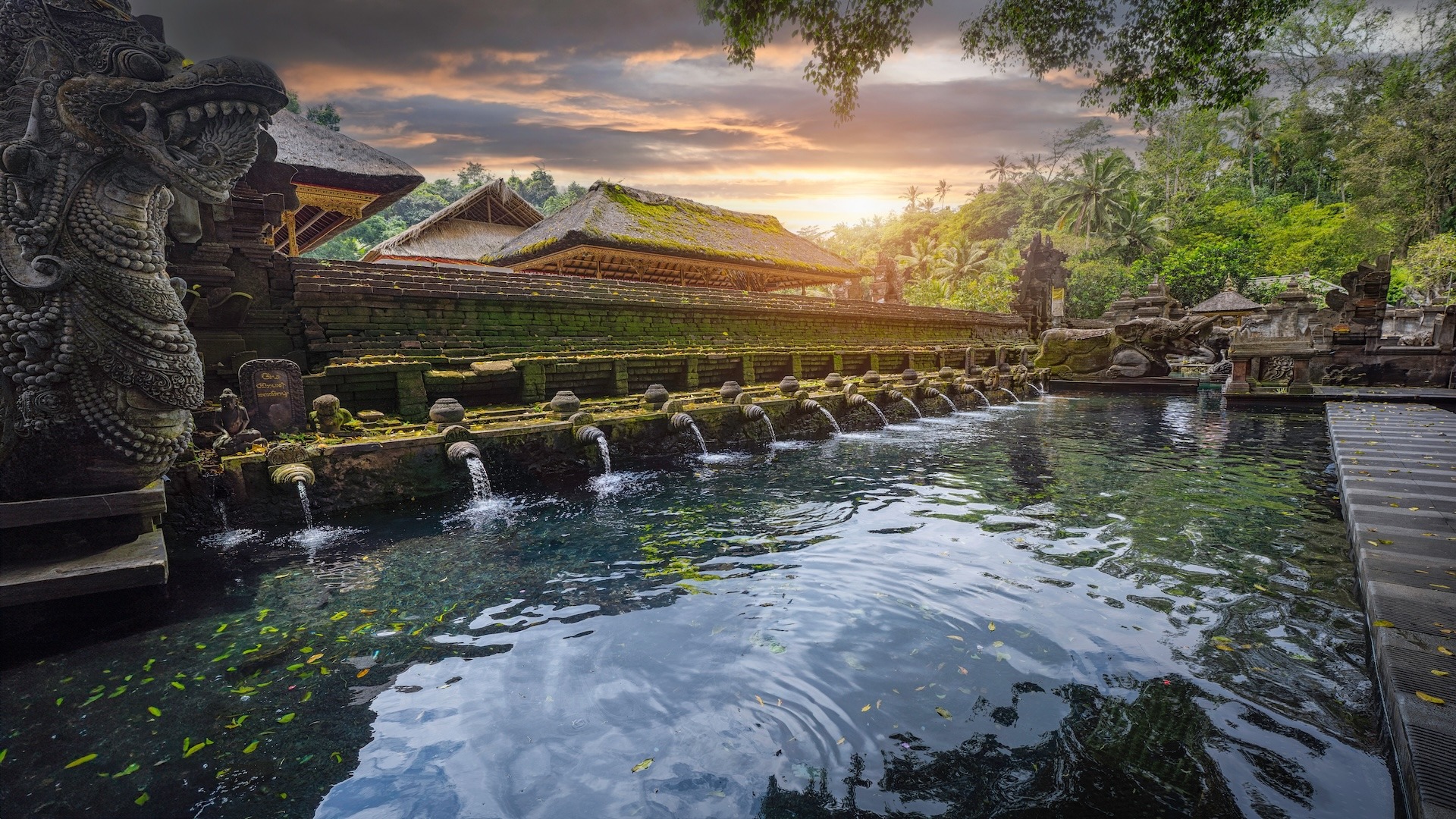
image source : Agoda
Tirta Empul, a temple that is considered sacrosanct by the Balinese Hindu community, is one of the busiest water temples in Indonesia. The temple is home to numerous sacred springs, which are purportedly the creation of the deity Indra. The water is believed to be blessed and capable of purifying those who bathe in it.Tirta Empul is dedicated to Vishnu, the Hindu deity of water. Tirta Empul is considered a sacred spring in the Balinese language because it is loosely translated as “water gushing from the earth.” The Tirta Empul Temple is home to sanctuaries dedicated to Shiva, Vishnu, and Brahma, as well as shrines dedicated to Indra and Mount Batur. It is regarded as one of the five most sacred temples in Bali and is included in the list of the most sacred water sources in the island. Pura Ulun Danu at Lake Beratan, Pura Tirta Tawar at Gianyar, Pura Tirta Harum at Bangli, Pura Tirta Taman Mumbul at Badung, and numerous other sacred water temples are also located in Bali.Tirta Empul was established in 926 A.D. and continues to be in use to this day. While the natives regard it as a sacred site of worship, tourists from all over the world are permitted to witness the beauty and engage in the purification ceremonies. In 2017, Tirta Empul was chosen as one of the destinations that the former US President Barack Obama, Michelle Obama, and daughters Malia and Natasha would visit and experience.
- Panglipuran Village
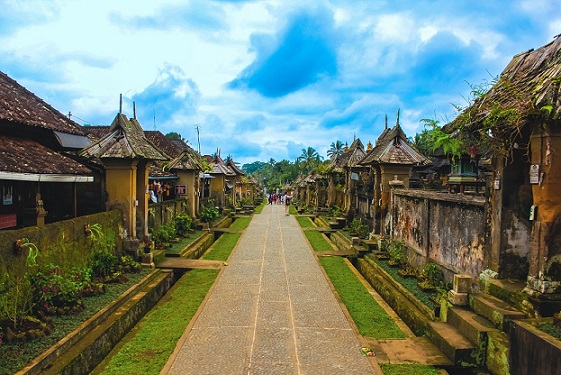
image source : kura kura bus
Penglipuran is a traditional village located in Bangli Regency, Bali Province. This village is renowned as a tourist destination in Bali due to its inhabitants who actively maintain and preserve traditional Balinese culture in their daily lives. The building’s construction and land management adhere to the Tri Hita Karana concept, a Balinese philosophy emphasizing the equilibrium of God, humanity, and the environment.Penglipuran Bali Village is one of three communities recognized as the cleanest in the world. This tourism hamlet has garnered multiple accolades due to its cleanliness and organization, including the Kalpataru and the ISTA (Indonesia Sustainable Tourism Award) in 2017, and it was recently recognized in the Sustainable Destinations Top 100 by the Green Destinations Foundation. - Pandawa Beach

image source : 30 sundays
Pandawa Beach may still appear obscure and relatively unknown nowadays. This beach possesses countless undisclosed attractions, nonetheless confined by limestone cliffs. Located in the town of Kutuh, within the South Kuta Sub-District of Badung Regency, it is approximately 3 km from the tourist destinations of Nusa Dua and Uluwatu Temple.Pandava Beach was first referred to as Secret Beach due to its concealment behind a series of rocky hills densely covered with vegetation. Access to the location is now more easily navigable by motor vehicles. Road access is deliberately constructed by cleaving huge limestone hills, resulting in an unusual vista surrounding the beach. The limestone cliffs by the beaches are punctuated and adorned with exquisite sculptural inscriptions representing the Five Pandava from the Mahabharata narrative.The beach panorama is exceptionally lovely and enchanting. This beach, featuring pristine white sand and azure-green waters, is ideal for bathing or swimming, since the waves crash offshore. Its eastern location allows us to appreciate a magnificent sunrise at the beach. Another attraction of Pandawa Beach is the presence of seaweed growers operating along the coastline. Furthermore, the activities of paragliding and motor trail are observable on the Hill. The beach aligns with Gunung Payung Beach in Kutuh Village, allowing us to appreciate the stunning vista of the waterfall cascading onto the beach.
- Nusa Penida
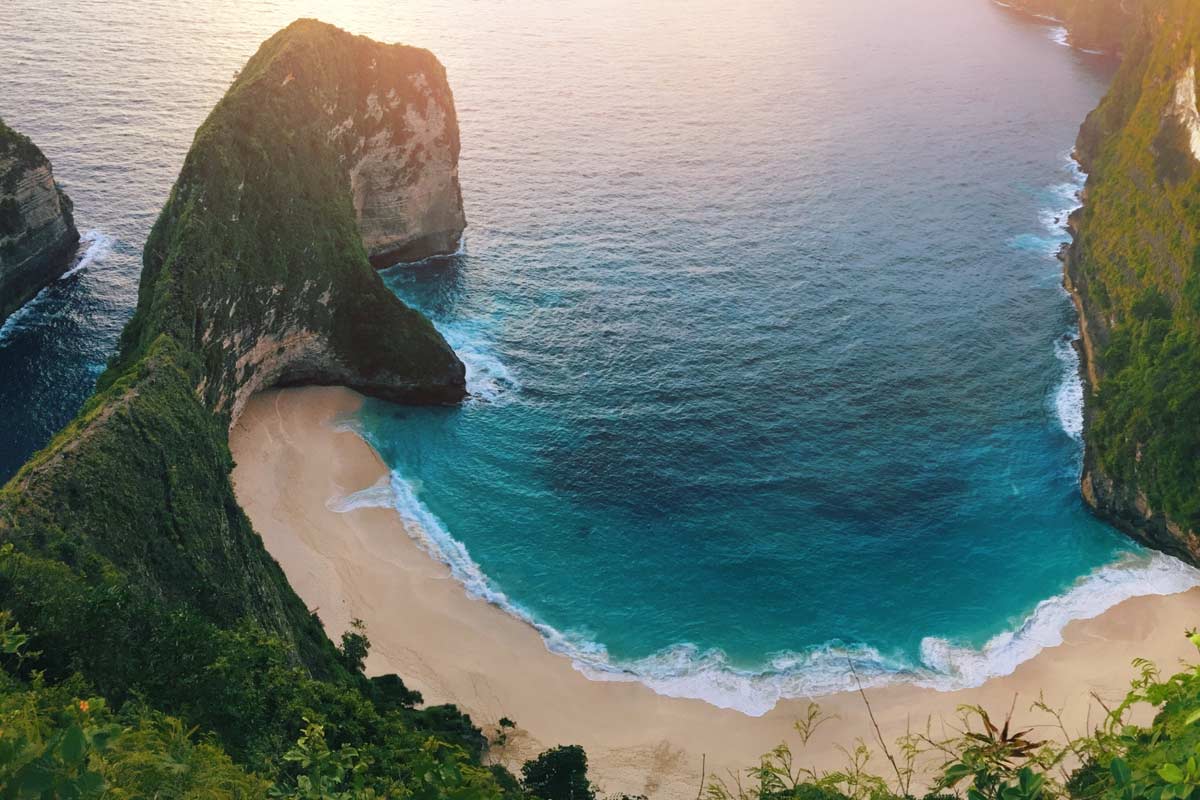
image source : bali.com
Nusa Penida is an island situated in close proximity to Bali, an island in the southeastern region of Indonesia. It is part of the same-named district in Klungkung Regency. Bali is separated from the island by the Badung Strait. The climate of Nusa Penida is drier than that of Bali, and the interior is mountainous, with a maximum altitude of 524 meters. It is a significant tourist destination, similar to Bali.Nusa Penida, along with the neighboring islands of Lembongan and Ceningan, creates an avian sanctuary.[four] The sanctuary has been established by the island communities through the application of traditional Balinese village regulations. The Friends of the National Parks Foundation (FNPF) originated the concept of a sanctuary.FiveIn 2006, all 35 villages (which are now 41 villages) reached an agreement to incorporate bird protection into their traditional regulations. The FNPF has since rehabilitated and released a variety of Indonesian birds, one of the most notable being the critically endangered Bali starling. This species is endemic to Bali, but its natural population had decreased to less than 10 in 2005. In 2009, the number of cage-bred birds on Nusa Penida had increased to over 100 following a two-year program by FNPF that involved the rehabilitation and release of 64 birds. The Java sparrow, Mitchell’s lorikeet, and sulphur-crested cockatoo are among the other species that have been released. - Nusa Lembongan
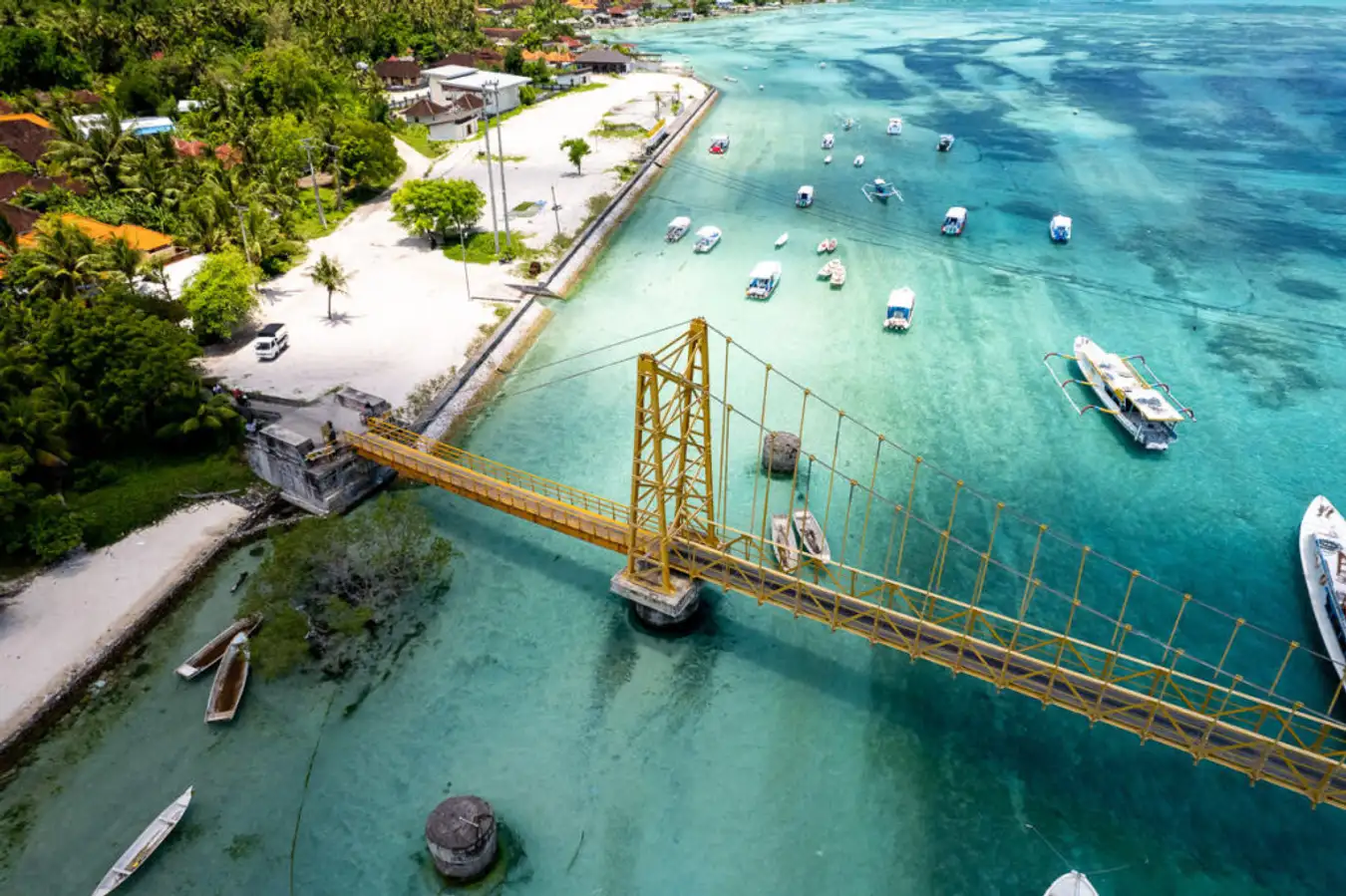
image source : mybalitrips.com
Nusa Lembongan, a lesser island that is separated by the Badung Strait and adjacent to the small islands of Nusa Penida and Nusa Ceningan, is located to the southeast of Bali. It is a place of unparalleled beauty. Nusa Lembongan, which is located in Bali Province’s Klungkung Regency, is a small island that spans only 8 kilometers in size. Its permanent population is approximated to be 5,000. Tourism is the primary source of income for this island.Consequently, the primary modes of transportation for the populace of Nusa Lembongan are scooters and foot, as the island is relatively small and has a low level of vehicle ownership.There are numerous stunning beaches in Bali that are worth exploring; however, not all of them are situated on the mainland. Nusa Lembongan is also regarded as a diminutive island with beaches of smooth, white sand. Dream Beach, Mushroom Bay, Coconuts Beach, and Jungutbatu Beach are among the numerous breathtaking shores that can be discovered in this region. The four of them possess unique charms that are incomparable.The primary bay in Nusa Lembongan is Jungutbatu Beach, where the majority of the boats from Bali approach. It is a popular destination for tourists due to its turquoise waters and white dunes. We suggest that you visit Coconut Beach if you are going with your family. This location is secure for children to play in due to the abundance of shallow water and shade provided by the trees.Mushroom Bay is also recognized for its family-friendly atmosphere. An all-day bathing area is located at the northern end of this beach, which is sure to be a thrilling experience for those who simply wish to relax along the coastline.
Dream Beach is the final destination. In contrast to Mushroom Bay and Coconut Beach, this beach is stunning but only suitable for experienced swimmers due to the presence of tides, large seas, and rips. Visitors must exercise caution. - Goa Gajah
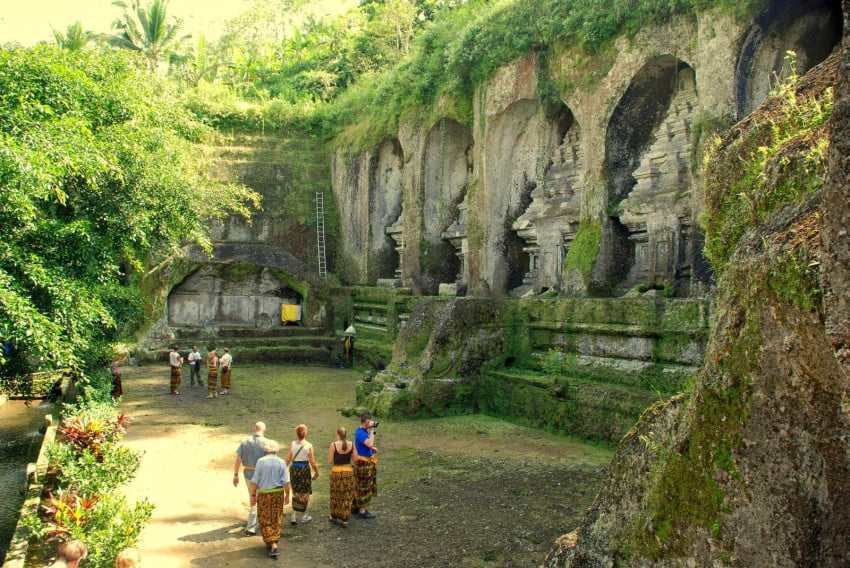
Goa Gajah meaning “The Elephant Cave”, is located in Gianyar on the island of Bali near Ubud, in Indonesia. Built-in the 9th century, it served as a sanctuary.Although the exact origins of the cave are uncertain, it is believed to have been built as a place for spiritual meditation. One folklore relates that it was created by the fingernail of the legendary giant Kebo Iwa. However, examining its style, the sanctuary was probably dated from the 11th century Bali Kingdom. The complex contains both Hindu and Buddhist imagery, as the cave contains lingam and yoni, symbols of Shiva, and the image of Ganesha, while by the river there are carved images of stupas and chattra, imagery of Buddhism.The cave was rediscovered by Dutch archaeologists in 1923, but the fountains and bathing pool were not discovered until 1954The temple is characterized by menacing faces that are carved into the stone – whose purpose is assumed to be the warding off of evil spirits. The primary figure was once thought to be an elephant, hence the nickname Elephant Cave. Other sources state that it is named after the stone statue of the Hindu God Ganesh (characterized by having the head of an elephant) located inside of the temple.[4]The site is mentioned in the Javanese poem Desawarnana written in 1365. An extensive bathing place on the site was not excavated until the 1950s.[5] The entrance of the cave is accessed only by walking down a long flight of stairs.[6] The inside of the temple is small and usually has trails of white smoke from the incense burning.[7] Visitors wearing shorts will be issued a sarong to tie around the waist before entering the courtyard. The complex also contains 7 statues of women (out of which 1 has been destroyed due to an earthquake) holding water pitchers that depict seven holy rivers of India: the Ganga River, Sarasvati River, Yamuna River, Godavari River, Sindhu River, Kaveri River, and Narmada River.
- Jatiluwih
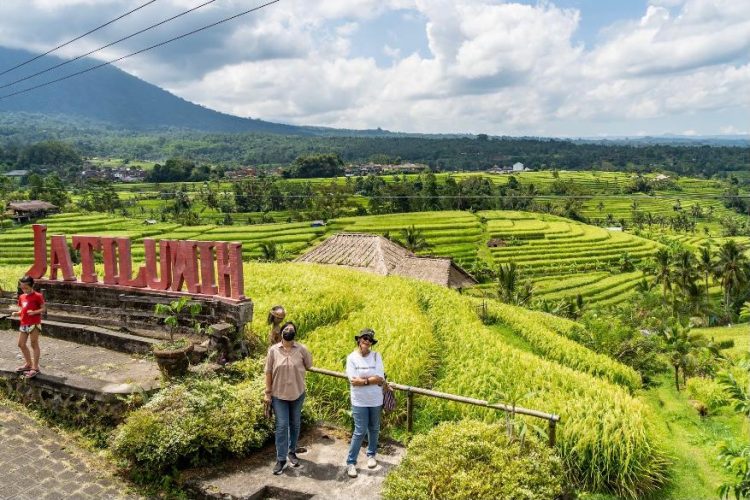
Jatiluwih area has always been known as one of the stunning beauty of rice terraces regions in Bali that produces great quality of rice. Located in the highlands (700 meters above the sea levels), and nearby the second tallest volcano in Bali, Mount Batukaru. It spans more than 53,000 hectares agriculture fields covered mostly with rice terraces. The area has hilly contours with fertile soils and offers an incredible scenery for photographs. Back in the day, the locals did not realize they have shaped nature into such a spectacular way that would be protected as a UNESCO Heritage Site. Today you’ll find Jatiluwih to be one of Bali’s must-see attractions, an iconic landmark that’s worth a visit for sure.Once Jatiluwih began to become more recognized by visitors from abroad, the local community wanted to make the area more accessible to visitors while also making sure that it is protected from any potential negative effects of tourism. Jatiluwih village is now one of the traditional villages showcased as a tourist attraction and is overseen by the government.
Visitors can learn about the concept of agricultural tourism, rice terraces, the subak system, and join various activities of farmers in Jatiluwih. You can volunteer to be a farmer for a day by doing; hoeing, Nampadin (cleaning procession for rice field), Ngelampit (plowing rice field), Melasah (leveling the soil of the rice field), Nandur (planting the rice), etc. Other activities include trekking, hiking and cycling through the rice fields when you visit the village, as it is a beautiful and refreshing experience. There are some cosy, cafes, warungs, and restaurants with signature dishes that is sourced using fresh produce grown only in Jatiluwih. - Kecak Dance
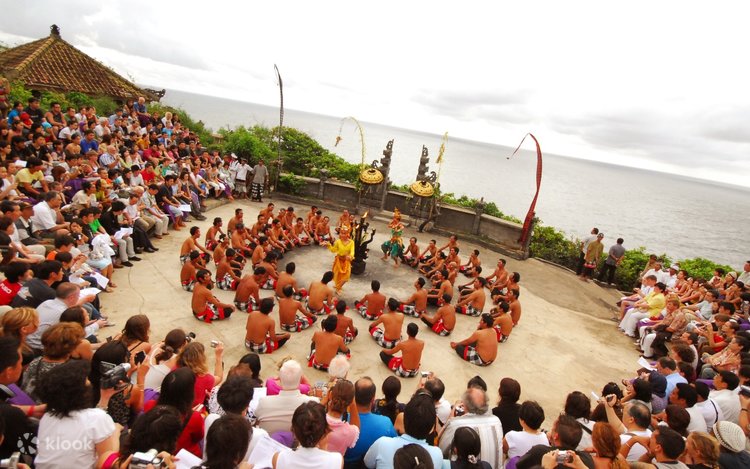
Kecak Dance or tari kecak in Bahasa Indonesia, is a form of Balinese Hindu Dance popularized in the 1930s. Since its creation, it has been performed primarily by men, with the first women’s kecak group having started in 2006. The dance is based on the story of the Ramayana and is traditionally performed in temples and villages across Bali, Indonesia.
Also known as the Ramayana monkey chant, the dance is performed by a circle of as many as 150 performers wearing checked cloths around their waists, percussively chanting “chak”, and moving their hands and arms. The performance depicts a battle of the Ramayana, in which the monkey – like Vanaras, led by Hanuman (white monkey), help Prince Rama fight the evil King Rahvana. Kecak has roots in sanghyang, a trance-inducing exorcism dance. Kecak was originally a trance ritual accompanied by a male chorus.In the 1930s, Walter Spies, a German painter and musician, became deeply interested in the ritual while living in Bali. He adapted it as a drama based on the Hindu Ramayana and including dance, intended for performance before Western tourist audiences.Walter Spies worked with Indonesian dancer Wayan Limbak, who popularized the dance by arranging internationally touring performances by Balinese groups. These tours helped make the kecak internationally known.
This is an example of what James Clifford describes as part of the “modern art-culture system” in which “the West or the central power adopts, transforms, and consumes non-Western or peripheral cultural elements, while making ‘art,’ which was once embedded in the culture as a whole, into a separate entity”. I Wayan Dibia, a performer, choreographer and scholar, suggests, by contrast, that the Balinese were already developing this form when Spies arrived on the island. For example, during the 1920s, Limbak had incorporated baris movements into the cak leader role. “Spies liked this innovation,” and he suggested that Limbak “devise a spectacle based on the Ramayana,” accompanied by cak chorus rather than gamelan, as would have been usual.
- Tirta Gangga
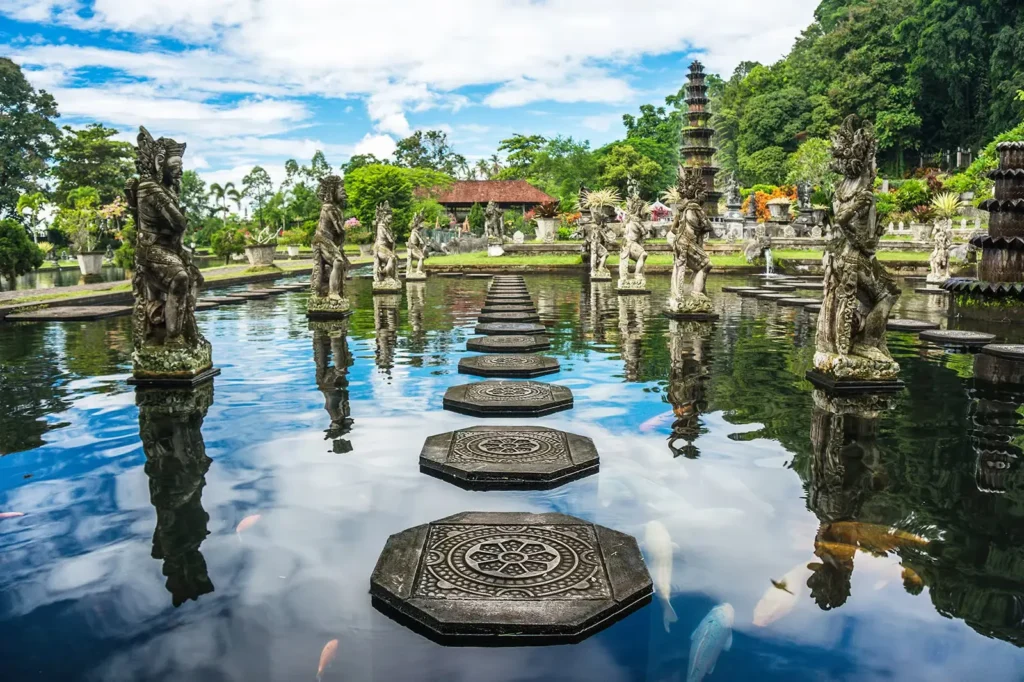
Tirta Gangga ᬢᬷis a former royal palace in eastern Bali, Indonesia. Named after the sacred river Ganges in India, it is noted for the Karangasem royal water palace, bathing pools and its Patirthan temple. Tirta Gangga is near the village of Ababi in County Abang, about 7 kilometres north of Amlapura ( Karangasem District) and south-east of Mount Agung.The complex was built in 1946 by the last king of Karangsem I Gusti bagus Jelantik, who was also responsible for the construction of Ujung Water Palace. Tirta Gangga was intended as a recreation place for the king and his family. It was destroyed almost entirely by the eruption of nearby Mount Agung in 1963.The temple complex covers one hectare. The springs that fill up the various ponds are to the northwest, on higher ground. Its waters are used for irrigation, economic activity and recreation. Tirta Gangga is also called “Taman Rijasa” (Rijasa garden) because some rijasa trees (anyang-anyang – Elaeocarpus Grandiflorus) were planted.
Tirta Gangga upholds the beliefs in Balinese Hinduism that the river Ganges and its waters are sacred. Its water is used as holy water (tirta) for religious activities. The Patirthan temple illustrates the historic significance of Tirta Gangga in the Balinese tradition as a pilgrimage and holy water site.
- Taman Ujung Water Palace
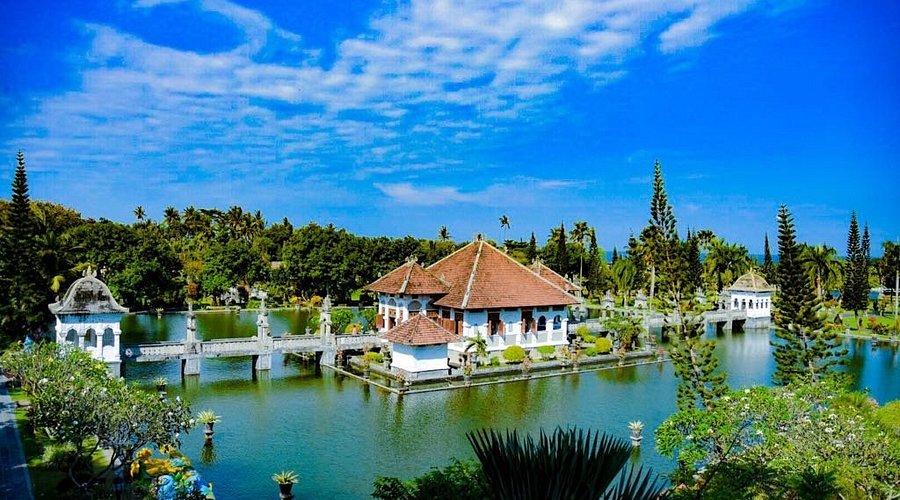
Taman Ujung is a former royal palace and gardens in east Bali. It blends a rich history with beautiful water features, enchanting bridges, and unique architecture that combines Balinese, Chinese, and Dutch influences. Taman Ujung Water Palace is located in the Karangasem Regency of eastern Bali, just a short distance from the coast. It’s around a 20-minute drive from the better-known Tirta Gangga Water Palace.The palace complex is centred around two large ponds with a building in the middle of each. The majestic buildings appear as though they’re floating on the surface of each pond. At the centre of the right pond is a white building connected by bridges on either side. This is Gili Bale (meaning Island Pavilion) and would have been the residence of King Karangasem who originally built the palace.Taman Ujung is a palace in east Bali built between 1909 and 1921 by the ruler at the time, Agung Anglurah Ketut Karangasem (who also built nearby Tirta Gangga). Literally translated, ‘Taman’ means park or gardens, and ‘Ujung’ means extremity, referring to the fact it’s a park at the extreme east of Bali.
Confusingly, it also goes by several other names, including Ujung Water Palace, Sukasada Park (named after the village), and Istana Air Karangasem (meaning Karangasem Water Palace).One of the architects hired to build the palace was a Dutchman as Bali was a Dutch colony at the time. Another of the architects was Chinese-born. This explains the unique mix of Balinese, Chinese, and European architecture throughout the palace.
- Taman Ayun Temple
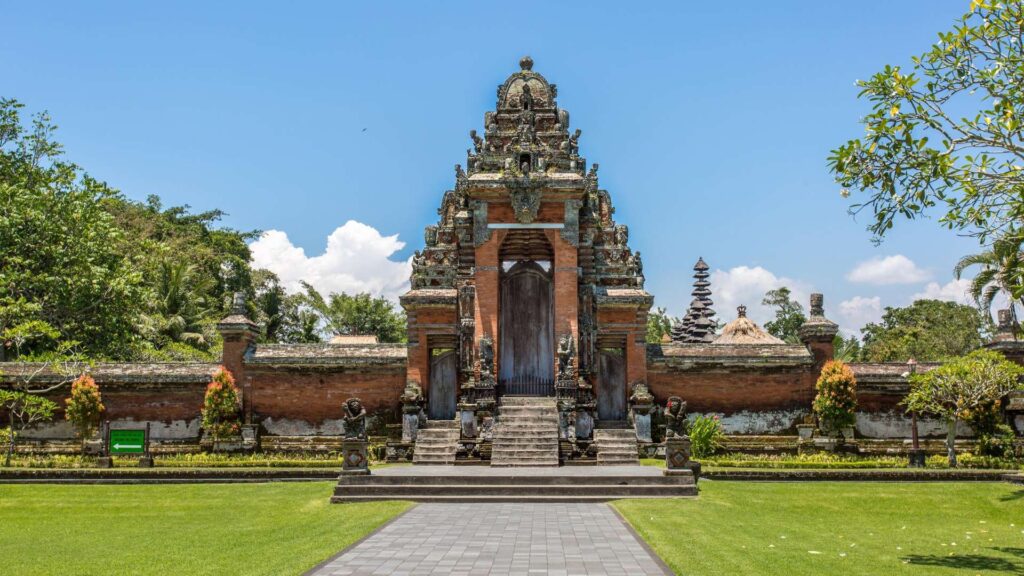
The Taman Ayun Temple, also known as the Mengwi Royal Temple, is in the serene Mengwi Village within the Mengwi sub-district of Badung Regency. Approximately 18 kilometres north of Denpasar town, this majestic temple is strategically positioned along the major roadway connecting Denpasar to Singaraja. This temple appears to gracefully drift upon the water, offering a picturesque and tranquil setting on a parcel of land with an expansive fish pond surrounding it.The temple boasts a striking architectural masterpiece with a multi-story roof, exemplifying the intricacies of Balinese design. Meanwhile, the expansive and meticulously landscaped garden in the front courtyard enhances the overall aesthetic appeal. Taman Ayun Temple is more than a mere tourist attraction it is a captivating destination, inviting all those on vacation in Bali to explore its beauty and experience its cultural richness.
Taman Ayun Temple, situated in Mengwi Village, is a sacred site from the 17th century. As a UNESCO-recognized cultural heritage, the temple showcases intricate Balinese architecture, lush gardens, and religious structures, creating a serene oasis for spiritual reflection. Established in 1634 by the Mengwi Dynasty, Taman Ayun Temple served as the primary temple for the kingdom. Its name, “Beautiful Garden,” reflects the harmonious blend of stunning architecture and meticulously landscaped gardens, embodying the deep spiritual connections of the Mengwi royals.