Bandung – West Java
Located about 2.5 hours southeast of Jakarta on a toll road, Bandung is a highland city that is the most popular getaway destination for Jakartans on weekends and extended vacations. Recently, it has emerged as a preferred holiday destination for travelers from Singapore and Malaysia, who flock here to buy and relish its natural beauty and exquisite cuisine. Also, because of its popularity, a large number of hotels have opened up with business amenities, opulent service, or inexpensive accommodations, and restaurants abounding with delicious regional food and traditional Dutch delicacies. Simultaneously, the neighboring town of Lembang and other picturesque regions now provide an extensive array of attractions and amusement suitable for the entire family, serving as a paradise for Instagram enthusiasts.
Today, Bandung is more famous around the world for its historic Bandung Conference, also called the first Asian-African Conference, which took place in 1955 and brought together 29 recently independent nations from the two continents, who combined account for more than half of the world’s population. Delegations were led by prominent leaders, including Jawaharlal Nehru and his daughter Indira Gandhi, King Norodom Sihanouk of Cambodia, Gamal Abdel Nasser of Egypt, Prime Minister Zhou En Lai of China, and Indonesia’s President Soekarno, among numerous others.
Bandung was the preferred destination of affluent tea and coffee planters who owned vast tracts of rolling tea and coffee plantations during the Dutch colonial era at the start of the 20th century. Bandung was subsequently referred to as the exquisite “Parijs van Java,” the Paris of Java. Consequently, in Central Bandung, one may still see Art Deco structures of Dutch colonial origin, like “Gedung Sate,” the Governor’s office; the current Bidakara Homann Hotel; and Gedung Merdeka, the site of the Asian-African Conference, which features an adjacent museum. Evocative of its golden era, certain restaurants continue to offer authentic, sizzling Dutch Beef steaks and Dutch bitterballen, attracting culinary enthusiasts to Bandung.
- Ciater Hot Spring
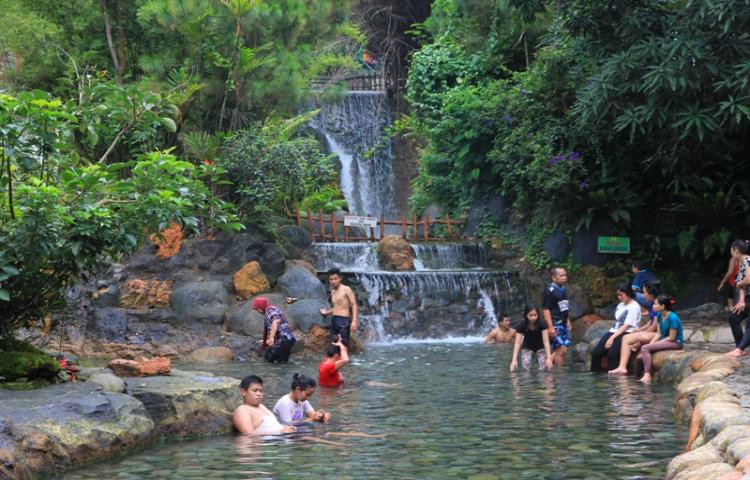
image source : pemkab subang
Immerse yourself in the tranquil mountains of Subang in West Java for an exquisite personal experience. Breathe in the pure mountain air and listen to the soothing sounds of flowing streams—the perfect combination to create an unforgettable environment. The natural hot springs in Ciater are famous for the restorative effects they have on the body. Guests are pampered in a serene setting while receiving expert care at the Ciater Hot-Springs Spa, which takes advantage of nature’s abundant restorative resources to rejuvenate body and soul.
- Ciwidey
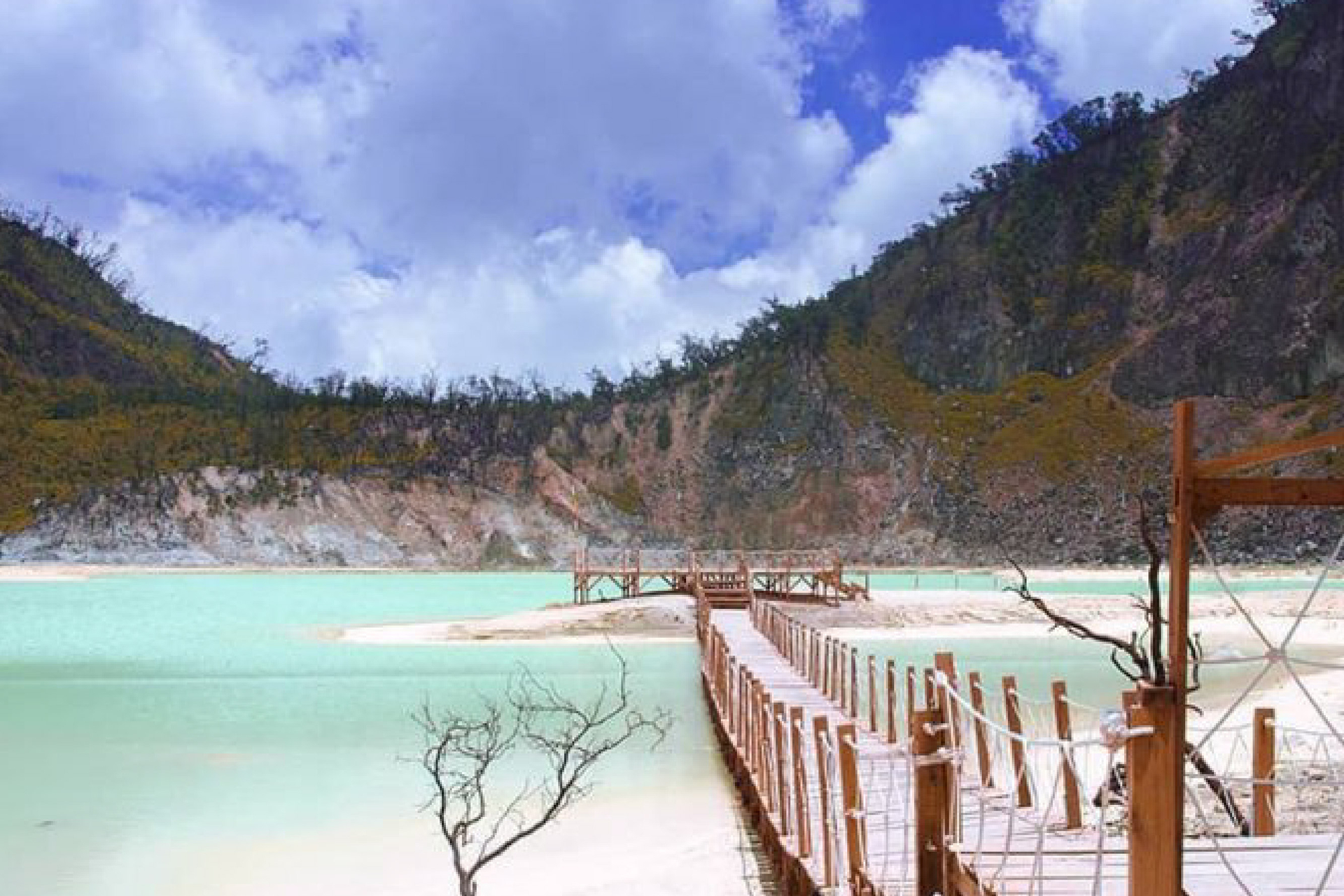
image source : tiket
Among the many rivers in West Java, the Ciwidey is a popular spot for riverboarders from the Indonesian Riverboarding Association. This river is located south of Bandung.
Located in the Bandung Regency (the area around the City of Bandung g), Ciwidey is famous for its picturesque countryside, strawberry orchards, and mild climate. The Ciwidey river cuts through the area. The “Kawah Putih” or White Crater, a crater in Ciwidey, is famous for the white sand that spreads out like snow and the clear, turquoise lake that lies inside. Perched 2,386 meters above sea level, the crater lake is situated atop Mount Patuha.
You need the right gear to go riverboarding. A board that resembles a broad surfboard but is designed for lying on one’s stomach with one’s face down in order to observe the river’s flow is an essential piece of equipment. You can also use the board to ward off dangerous obstacles. Because this is a highly dangerous activity, boarders are required to wear a variety of safety gear, including a wet suit (like divers), a life jacket, elbow and knee floaters, a helmet, fins, and a swimsuit. You need swimming skills to see this sport.
There are numerous big stones in the river’s center and vast waterfalls that are around 1 meter or somewhat higher along the 20 km Ciwidey River, which has a fairly strong stream. These waterfalls should only be ventured by individuals with advanced grades. Overflowing its banks is a common occurrence during the wet season. Rafting and river boarding on Ciwidey should, however, be done just during the dry season.
Boarders typically travel in clusters. The group’s leader clears a path so that the rest can dodge falling stones. When everyone in the group is new to a certain stretch of river, the leader will often take a stroll along the bank to get a feel for the river’s characteristics. Prioritizing safety and being cautious is of paramount importance.
- Tebing Keraton
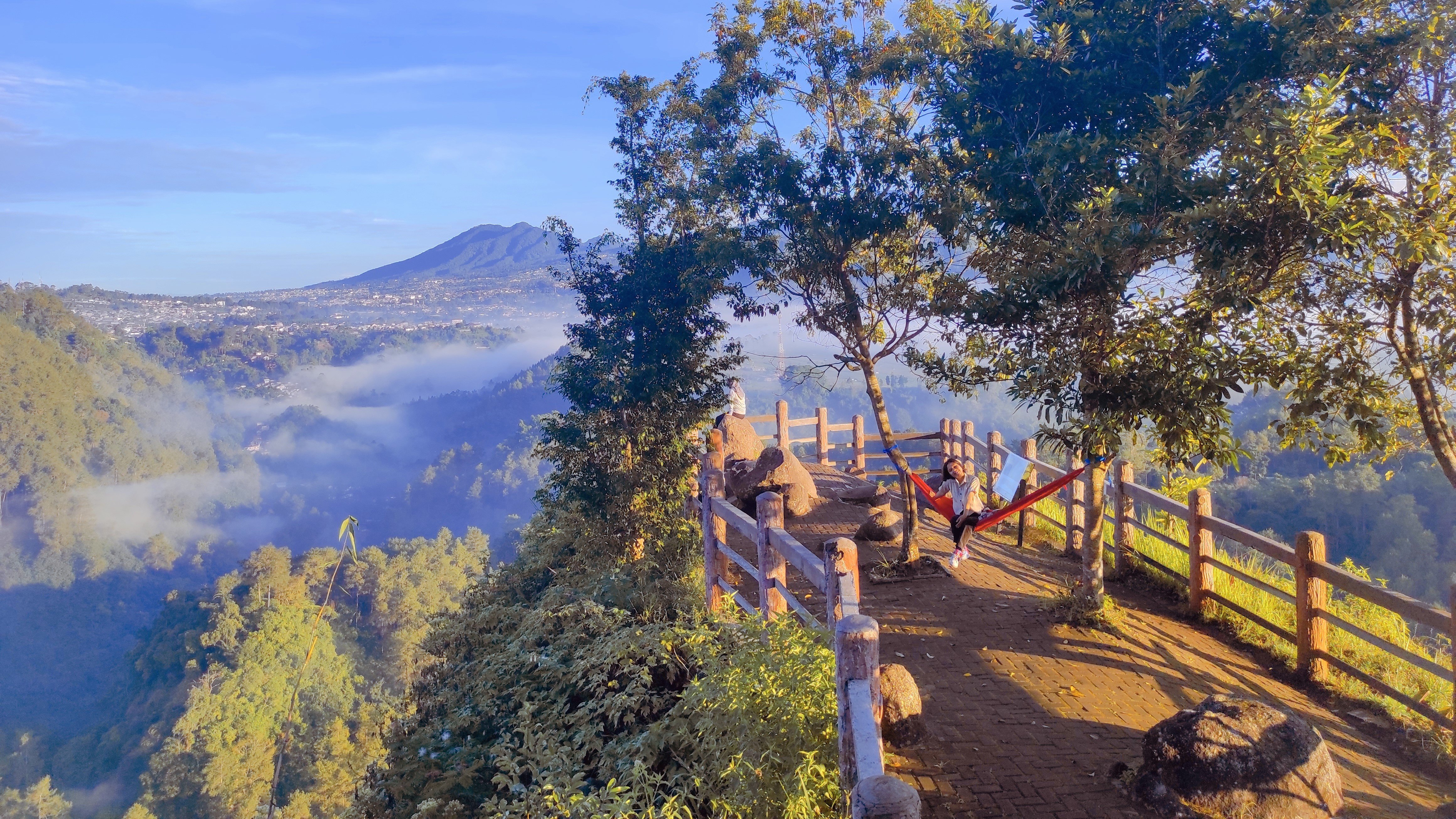
image source : salsa wisata
“The Royal (Palace) Cliff” is a straightforward way to describe Tebing Keraton. The name captures the breathtaking view of the beautiful natural surroundings in north Bandung that one may enjoy from the clifftop location. Ciburial Village, Cimenyan sub-district, Bandung Regency is home to Tebing Keraton, a mountain peak 1,200 meters above sea level situated inside the Ir H Djuanda Forest Park. A rock protrudes from the cliff face in the center of the main area, providing an ideal vantage point from which to take in the breathtaking scenery.
Green hills, a meandering river, dense woodlands, rice farms, and towering mountains in the horizon provide for a breathtaking panorama from this vantage point. The breathtaking scenery is a section of the canyon carved out by the opposing Lembang Hill. At sunrise and sunset, when the sky is a kaleidoscope of colors that harmonize with the verdant landscape, the cliff offers its most breathtaking view.
The cliff, originally known as “Cadas Jontor” or, more informally, “the bulging rock,” is well-known to the locals despite having only been “discovered” and made popular in the middle of 2014. To better portray its magnificent scenery, the cliff was renamed Tebing Keraton after hundreds of “selfies” and social media hypes.
- Bandung Culinary
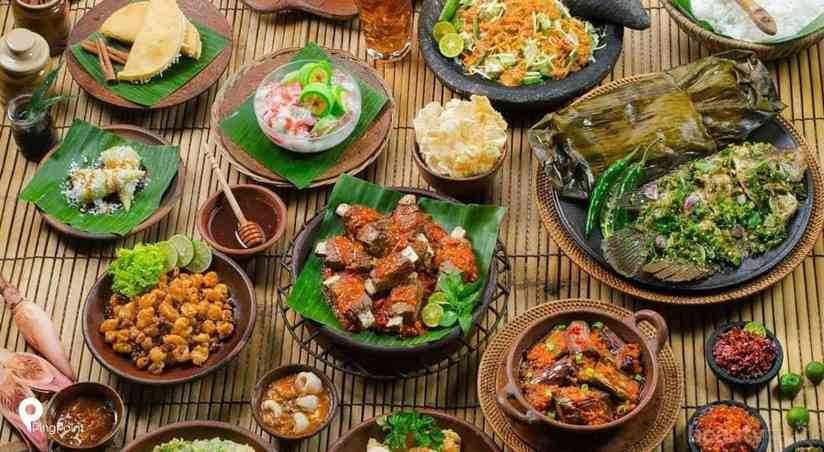
image source : telkom university
The capital of West Java province is a popular destination for foodies. The sights and attractions of Bandung will wow you. Every tourist can discover something to their taste, from the wide variety of street vendors’ wares to the most upscale restaurants’ offerings.
Timbel, a famous nasi timbel meal, includes lalapan, sambal dadak, fried chicken (sun-dried or roasted), fried beancurd, fried tempeh, and a slice of salted fish. Everyone from locals to tourists loves nasi timbel. The fried meatballs with beancurd, or batagor baso tahu goreng, is a highly sought-after specialty. Batagor, a dish that has been popular for a long time, is made with a blend of fish and beancurd with a particular peanut sauce.
Traditional Indonesian pastry packed with banana and cheese, pisang molen, might appeal to those with a sweet craving. Brownies kukus, often known as steamed brownies, are a fun twist. Perfect for a steamy summer day, es cendol is a delicious concoction of ground rice, palm sugar, and coconut milk. Some bandrek or bajigur can be just what you need on a chilly day. Yogurt is just one of many milk products available in Bandung. Essentially, Bandung is known for its thin yogurt and its thick yogurt, which is influenced by French cuisine.
You may find hot appetizers that are typical of Bandung on every corner. A few examples are cireng-aci goreng (fried tapioca), pisang goreng (fried banana), and gehu-toge tahu (tofu with beansprouts and veggie filling). Other treats like nangka goreng, peuyeum goreng, or nanas goreng are worth a try. The toasted sticky rice (ketan bakar) and roasted or boiling maize (jagung bakar/rebus) are also suggested.
Even though nasi goreng (fried rice) isn’t actually from Bandung, it’s always a crowd-pleaser. The components can change based on personal taste. Chicken and veggies, mutton and veggies, salted fish, crab flesh, shrimp, squid, and other seafood are occasionally incorporated with the rice.
- Tangkuban Perahu

image source : telkomsel
An active volcano called Tangkuban perahu may be found 30 km north of Bandung, heading towards Lembang. You may drive up to the edge of this crater, making it unique in Indonesia. Mount Tangkuban Perahu resembles an “overturned boat” due to its unusual shape. Despite the volcano’s lack of activity, the crater here keeps emitting sulfur odors, which will meet you as you arrive.
The surrounding Parahyangan (Land of God) Highlands owe Tangkuban Perahu a great debt of gratitude for their development. Lava from the eruption carried gigantic rocks into the valleys, creating enormous cliffs. Waterfalls jumped over these cliffs to create the lake that now surrounds the Bandung plain, greatly contributing to the development and fertility of the hills north of Bandung.
Tangkuban Perahu Crater, situated on a hill on the outskirts of Bandung, is an ideal spot to unwind with some fresh air and beautiful scenery after a day of shopping. Guests looking for a more revitalizing experience can keep on their way to the adjacent Ciater’s Revitalizing Hot Springs.
- Pasar Baru Trade Center
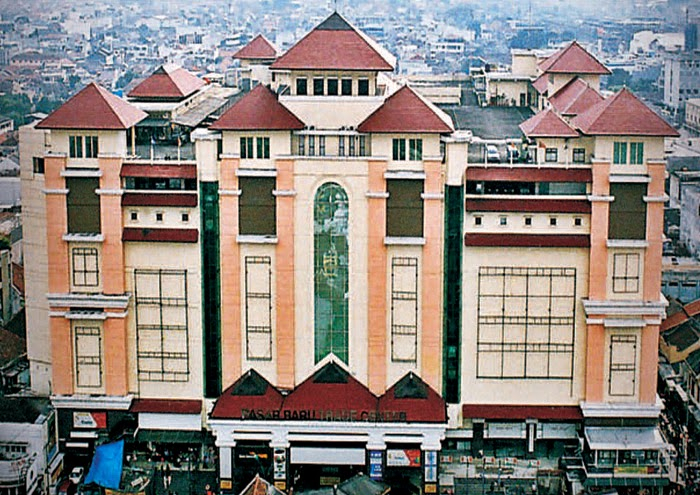
image source : pinhome
You may get the best of both worlds at Pasar Baru Trade Center (PBTC), which is conveniently located near Bandung’s Central Train Station and provides an authentic, old-fashioned shopping experience complete with the participatory art of bargaining. The New Market, or Pasar Baru as it was originally known, is the oldest continuously operating market in Bandung.
No matter how many years pass, PBTC will always be the market for everyone. A site where pricing are not set in stone by labels but rather are reached through discussion. People still go from all over the nation to purchase textile goods in bulk, including t-shirts, jeans, and more, to resell and distribute. Hijabs, trendy Muslim women’s apparel, and other Muslim-specific garments are renowned to be best found at the market.
The numerous kiosks lined up along the ground floor façade provide visitors a wide variety of native Sundanese snacks and morsels, such dodol garut, banana sale, Tempe crackers, and many more. All for a fair price. Pasar Baru Trade Center is “where price does matter” because it combines the comforts of modern shopping with the traditions of traditional shopping rituals.
- Angklung Ujo

image source : wikipedia
In the middle of Bandung’s busy eastern district, inside Udjo’s House of Angklung, you can hear the gentle symphony of vibrating bamboos that the artist hopes will reach every corner of the globe. Along with preserving the interdependent relationship between people and their natural surroundings, it promotes the ideals of simplicity, cooperation, unity, and togetherness.
Saung Angklung was founded in 1966 by the late Udjo Ngalagena (1929–2001) and his cherished wife, Uum Sumiyati. The Sundanese traditional art and culture of West Java were the driving force behind the construction of Udjo. At Udjo’s House of Angklung, Sundanese art and culture flourish and receive due attention on a global scale because of the passion and principles brought by Udjo Ngalagena. In November 2010, Angklung was inscribed on the Intangible Cultural Heritage List by UNESCO, finally fulfilling his efforts to develop and promote the art form.
Environmental protection is another one of Udjo’s House of Angklung’s guiding principles. Joining forces with the Ministry of Forestry, Udjo’s House of Angklung has established the Forestry Counseling Centre and participated in the ‘Indonesia Planting’ Campaign (Kampanye Indonesia Menanam) to be environmentally responsible.
The villagers’ playtime, or “Kaulinan Urang Lembur,” is the pinnacle of Udjo’s House of Angklung’s artistic philosophy: simple, inexpensive, educational, visually appealing, large-scale, and joyful performances. Starting with a wayang golek (wooden puppet) show, traditional dances, helaran (agricultural harvesting celebration) rites, children’s games, an introduction to angklung, an angklung orchestral performance, an interactive angklung performance where visitors play the instrument, and an arumba performance, the show is jam-packed with spectacular short performances.
- Kawah Putih
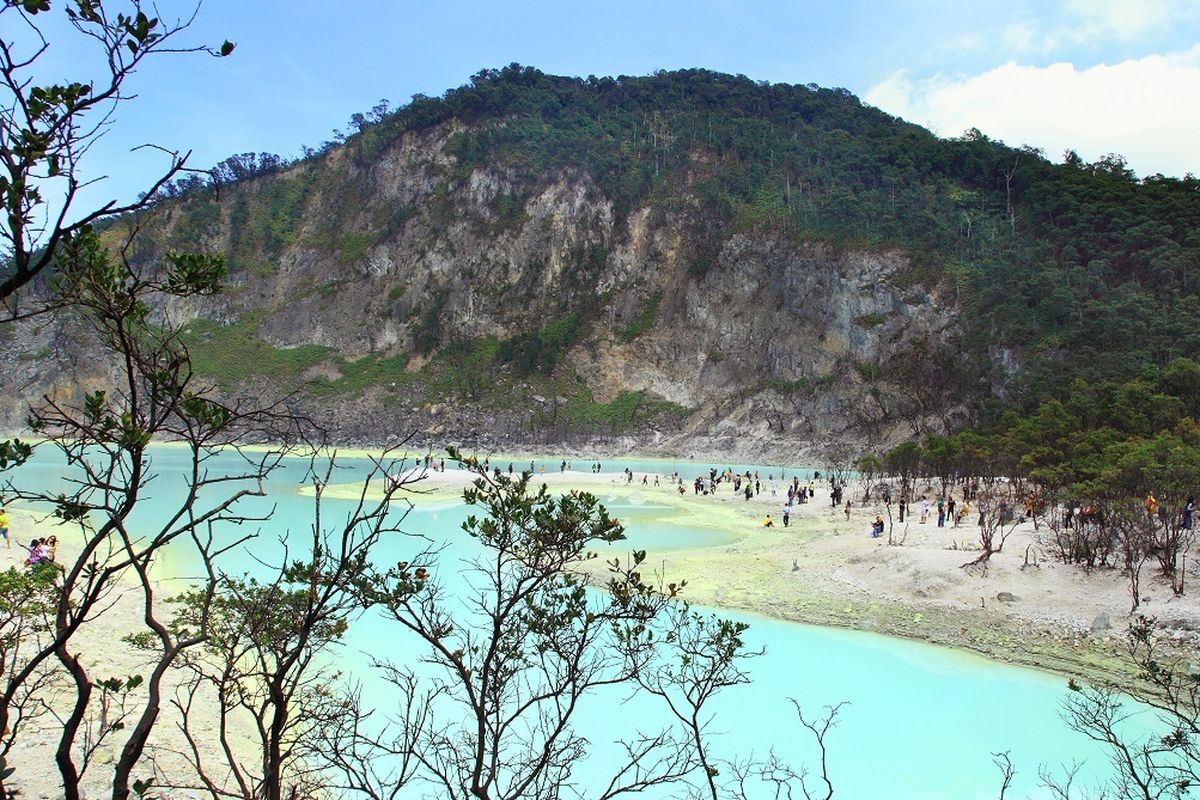
image source : kompas
Situated around 50 kilometers south of Bandung, Kawah Putih is close to the picturesque tiny market town of Ciwidey. The Patuha Crater, also known as the dry Kawah Patuha, is situated 600 meters to the northwest of the Crater Lake and is one of two craters on Mount Patuha. Entering Kawah Putih is like stepping into another world.
The Crater Lake and its environs are mostly white, giving off an ethereal, dreamlike vibe, as the name implies. The water of an otherworldly turquoise hue fills the enormous, inactive volcanic crater. The cliffs encircling the crater, which are covered with trees and reach an elevation of about 2,500 meters above sea level, provide a breathtaking background, particularly when clouds begin to gather. The cold weather that comes with being so high up here will, in a manner, enhance the mystical beauty of Kawah Putih.
The Japanese military took control of the facility during WWII and ran it as Kawah Putih Kenzanka Yokoya Ciwidey. While the factory itself is long gone, traces of the mining operations that once took place there, including entrance points to the tunnels, can be observed at several locations in the surrounding area. Since its doors first opened to the public in 1987, Kawah Putih has become a popular stop for sightseers and day trippers captivated by its enchanting atmosphere. Huge crowds of sightseers flock to the region on holidays and weekends to behold the magical beauty of nature.
- Bandung Factory Outlet

image source : trip advisor
Bandung is home to many of Indonesia’s textile factories, so it’s no surprise that the city is also home to a plethora of factory outlets, which Jakarta residents go in search of reasonably priced, on-trend clothing. People in Bandung will buy warm clothes in bulk for those who are going on a cold-weather vacation.
Factory outlets or distribution stores, or Distros, may be found all around Jakarta, particularly on weekends, along Jalan Riau (formally known as Jalan RE Martadinata), the major Dago Avenue (now called Jalan Ir H Juanda), and the road leading up to Lembang. The most popular place to shop for clothing is on Jalan Cihampelas, which is also well-known for its many snack food businesses where you can pick up all sorts of tasty treats to share with friends and family. Bandung used to be famed for its stunning colonial residences, and many of these stores are located in those same buildings.
Whether you’re looking for moderately priced or branded leather items, Bandung has you covered. Shoes and purses of various shapes and sizes are available in a wide variety. The Cibaduyut area is known for its leather goods and shoes, however, the city is home to many more (the most popular being “Diaz” and “Elizabeth”).
The Cipularang toll road connecting Jakarta and Bandung has greatly reduced travel time, cutting down the previously three-hour journey through beautiful scenery to just over two hours. It is well worthwhile to spend even a single day in Bandung.
- Lembang
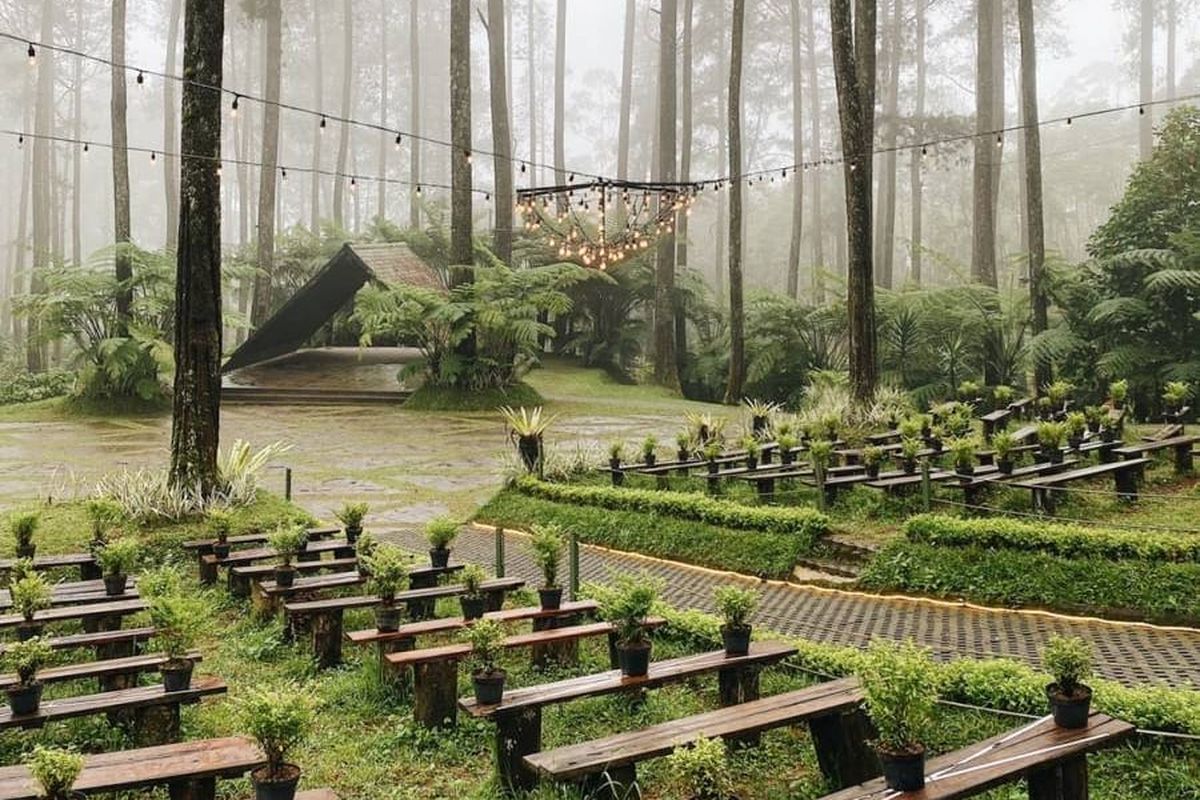
image source : kompas
Savor Lembang’s pristine beauty. Get away from it all and savor the crisp, rain-scented air and chilly breeze.
Lembang is a great place for people who enjoy nature to get away from the city, and it’s located north of Bandung, which is a beautiful city. The Lembang highland offers a welcome respite from the heavy heat, beautiful scenery, and lovely tea plantations.
Lembang, a popular getaway spot for city dwellers, offers mountain adventures and clean air. There are a number of must-visit locations in this region. These include the natural adventure and waterfall-filled Lodge Maribaya, the picture-perfect Keraton Cliff, and the fabled Tangkuban Perahu Mountain, with its breathtaking craters and vistas.
Lembang is another fantastic destination for a family vacation. If you are traveling with children, you absolutely must visit Farmhouse Lembang or De’Ranch. Both Farmhouse and De’Ranch provide fantastic family-friendly activities, such as horseback riding and a visit to the Hobbit abode. Do you prefer an alternative? A more enlightening kind of holiday is possible when one goes stargazing at Bosscha Observatory.
Lembang is more famous for its restaurants than it is for its modern malls and commercial centers, in contrast to Bandung. A lively and colorful amusement park, the Floating Market Lembang offers a variety of cuisines from boats.
Some people find that being around greenery helps them relax. Lembang is a verdant hill that is home to several plantations, including those for strawberries, tea, and vegetables. Come to these plantations and harvest your food, or purchase it from nearby farmers. If you want to spend some time in nature, these are the spots for you.
Cikole Orchid Forest is a fantastic spot to go exploring if you’re seeking an adventure in a mountain forest. The Cikole Orchid Forest offers a soothing mountain wind-free of pollution, just 5 kilometers from Alun-alun Lembang or around 45 minutes from Bandung. There are many different kinds of orchids, as well as pine trees and elaborate sceneries. Rare orchids from all over the world, including those from West Java (Phavio) and Argentina, Peru, the Philippines, and countless more are among the almost 20,000 species here. In addition, there are a lot of fun things to do there, such ride flying foxes or cross a wooden bridge that is 23 meters over the valley floor.
- Braga
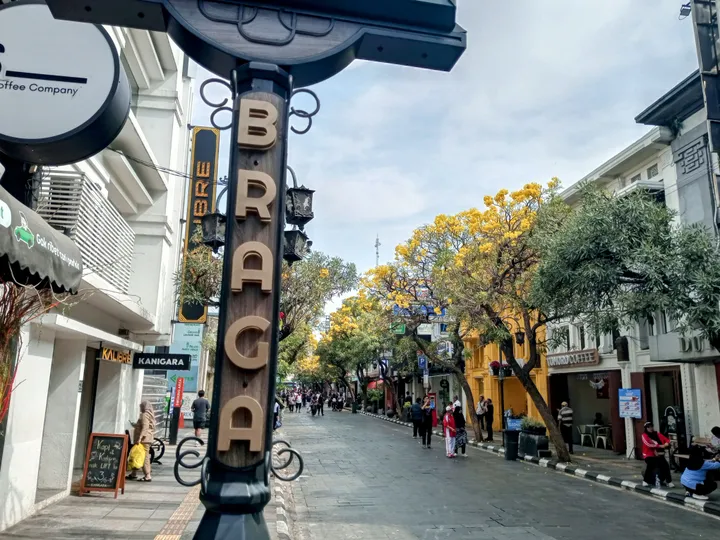
image source : pikiran rakyat
In the 1920s, colonial Indonesia’s Braga route became popular as a promenade route. The street is located in the heart of Bandung, Indonesia, and its Indonesian name is Jalan Braga. Bandung was dubbed “Paris of Java” by the Dutch due to its European vibe and the abundance of trendy cafes, boutiques, and restaurants that line its streets.
Braga Street goes north until it reaches the city council (balaikota), starting at a T-junction with Asia-Afrika Street (previously De Groote Postweg).
- Asia Africa Museum
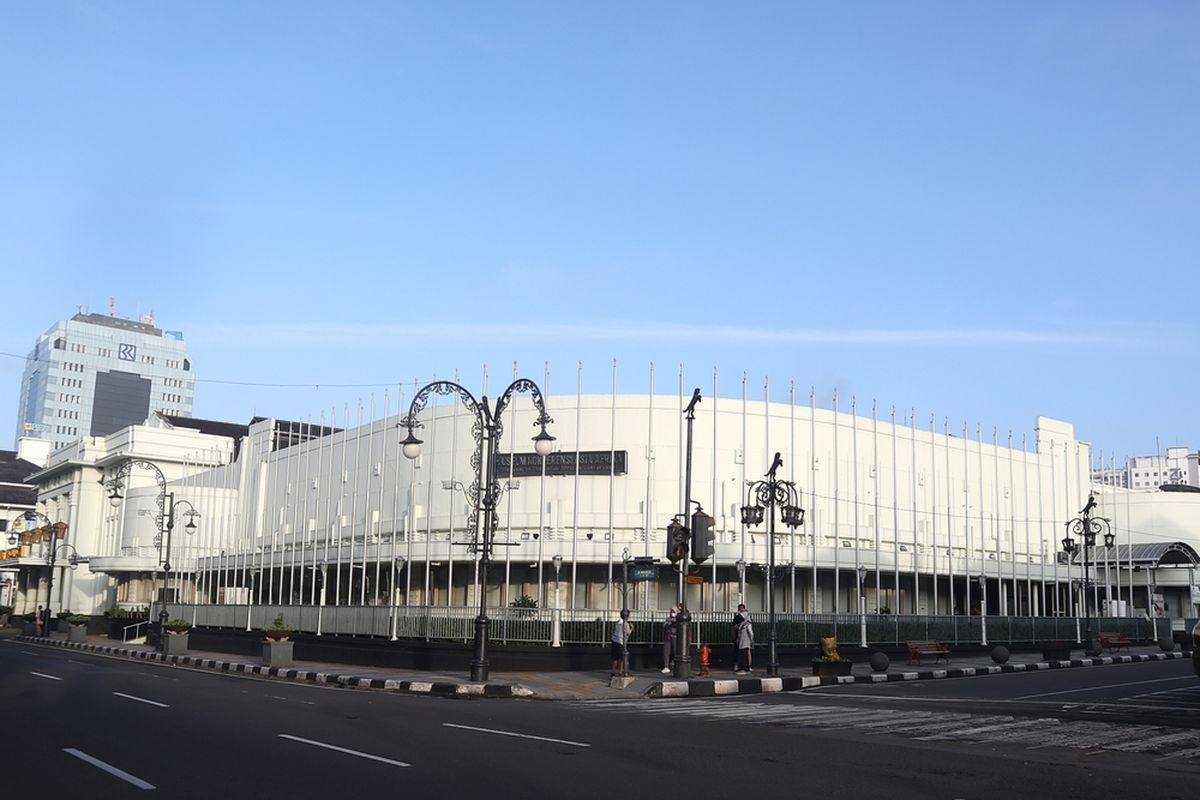
image source : kompas
One of the most momentous occasions in Indonesian history, the Asian-African Conference took place in Bandung from April 18th to 24th, 1955, and was a watershed moment for the country and its government. Given that the summit took place within a decade after Indonesia declared independence, this is indeed the case. Indonesians mustered the bravery to suggest themselves as the site of such a pivotal international conference in a relatively short time. What matters most is that the conference was able to achieve its goals of establishing a global order and a peaceful world, as well as of identifying shared issues and developing practical guidelines for collaboration among Asian and African states. The Dasasila Bandung, adopted at the summit, served as a blueprint for the liberation struggle of the formerly colonized nations. Promoting global peace and worldwide collaboration also emerged based on these ideas.
For both Indonesian and Asian-African foreign policy, the guiding principles and fundamental inspiration of the Asian-African Conference serve as a beacon of hope. It raises awareness to inspire the youth of Indonesia and other Asian African nations to take on better roles and achieve greater prestige, and it strengthens cooperation among Asian African nations, which in turn makes their influences and roles in international cooperation more active and respected.
If the Asian-African Conference and its events are to be preserved in perpetuity in the museum in Gedung Merdeka, Bandung—a city that serves as both a capital and an inspiration to the Asian and African nations—then the aforementioned goals will be accomplished.