
Labuan Bajo
The town of Labuan Bajo is located at the westernmost tip of the Island of Flores. It exists quietly, with numerous phenomena available for exploration. Labuan Bajo, initially a modest fishing settlement, has developed into a significant gateway to numerous exotic destinations in East Nusa Tenggara.
The significant interest among travelers is centered on Komodo Dragons, known locally as ora. The national park serves as a significant attraction, exemplifying its exceptional value.
In 1991, Komodo National Park was designated as a UNESCO World Heritage Site. It hosts intriguing wildlife in both terrestrial and aquatic environments. The park includes Komodo Island, Rinca Island, Padar Island, and various smaller surrounding islands.
Labuan Bajo is recognized as the city of sunset. Numerous exceptional scenic views of the sky are available.
Several noteworthy destinations can be explored within the city. The Mirror Cave is situated merely 4 kilometers from Labuan Bajo. Dutch archaeologist Theodor Verhoeven, who posited that Labuan Bajo was previously submerged, discovered this cave in 1951. The cave is locally referred to as Goa Batu Cermin. The reflective stones exhibit a shine in certain areas, which explains the designation “Goa Batu Cermin.” It is translated as “stone mirror cave.”
Have you ever experienced swimming in a cave lake? This presents an opportunity to experience it in Rangko Cave. Located in Ranko Village, this natural feature showcases its blue waters illuminated by sunlight that directly reaches its cave lake. Their stalagmites are indeed impressive.
Exploration of the routes to Cunca Rami and Cunca Wulang canyon waterfalls is also possible.
Bukit Cinta, Puncak Amelia, and Puncak Silvia serve as vantage points located in proximity to Komodo Airport in Labuan Bajo. One can observe remarkable vistas of the island and the expansive sea during sunset.
1. Komodo National Park
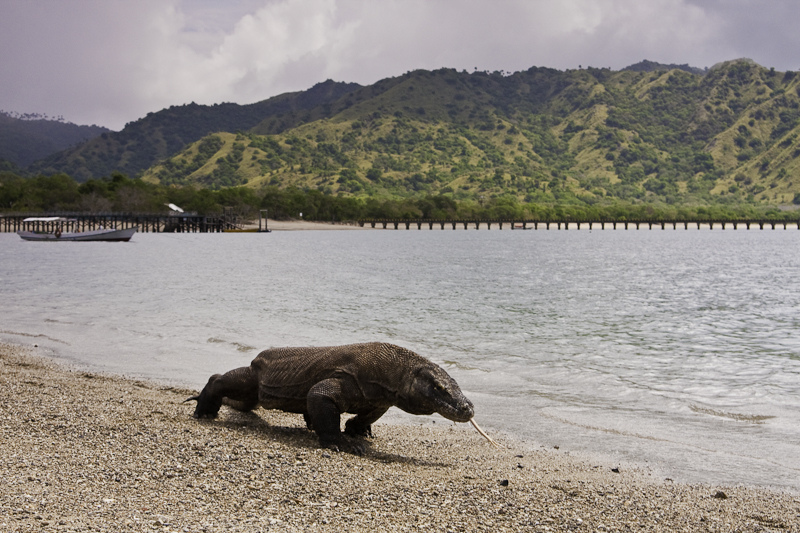
image source : wikipedia
Komodo National Park, known in Indonesian as Taman Nasional Komodo, is situated in Indonesia’s Lesser Sunda Islands, straddling the border between East Nusa Tenggara and West Nusa Tenggara provinces. The park comprises three major islands: Komodo, Padar, and Rinca, along with 26 smaller islands, covering a total area of 1,733 km², of which 603 km² is land. The national park was established in 1980 to conserve the Komodo dragon, the largest lizard species globally. Subsequently, it was designated for the protection of various species, including marine species. In 1991, the national park was designated as a UNESCO World Heritage Site and a Man and Biosphere Reserve. This region is recognized as one of the 25 biodiversity hotspots globally.
Komodo National Park has been designated as one of the New 7 Wonders of Nature.2 The waters around Komodo Island exhibit significant marine biodiversity. The Komodo Islands are situated within the Coral Triangle, an area recognized for its exceptional marine biodiversity.
This area is designated as a WWF Global 200 Marine Eco-region, a WWF/IUCN Centre of Plant Diversity, one of the world’s Endemic Bird Areas, and an ASEAN Heritage Park.
2. Pink Beach
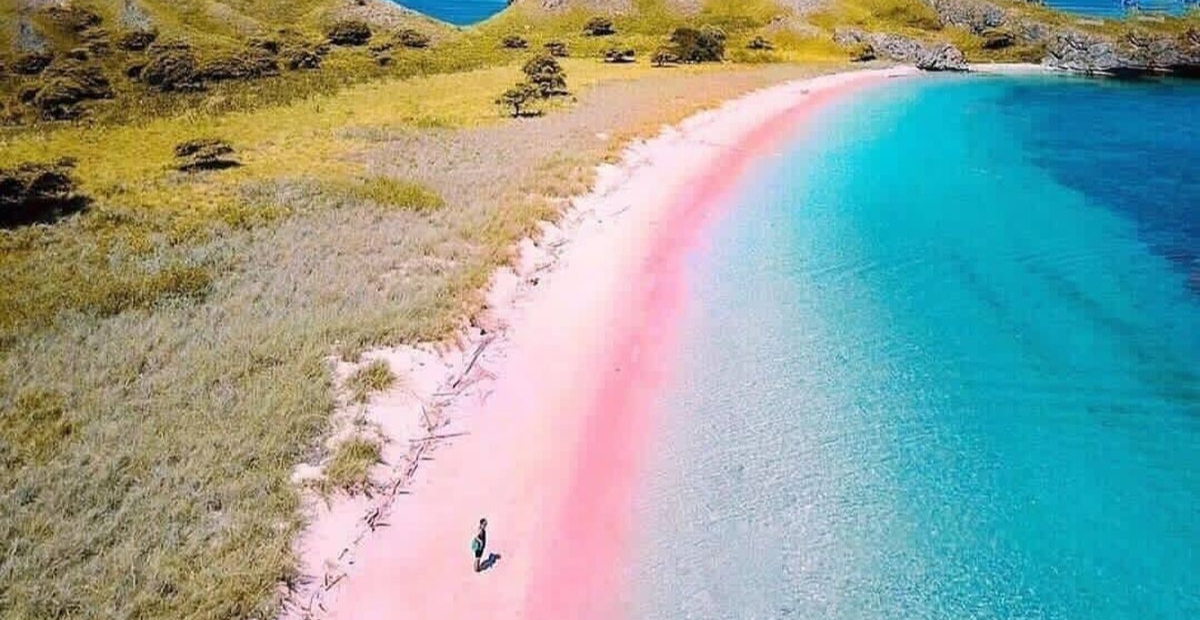
image source : zalora
Pink Beach, also known as Pantai Merah, is one of seven pink beaches globally and represents a remarkable feature of Komodo Island, contributing to its designation as a Natural Wonder. This beach’s distinctive color is attributed to microscopic organisms known as Foraminifera, which generate a red pigment on coral reefs. This designation arises from the local language, hence the name Red Beach. The combination of small red coral fragments with white sands results in the soft pink hue observed along the shoreline. In addition to Pink Beach, several small areas along Komodo’s eastern bay exhibit a pinkish hue.
Komodo Island, situated directly west of Flores Island in East Nusa Tenggara, is one of three major islands within the Komodo National Park and is notably recognized as the natural habitat of the Komodo dragon. The Komodo Dragon, the largest extant lizard, derives its name from the island on which it is found.
Consider the panoramic views of turquoise seas, green hills, blue skies, and pink sands. In addition to the evident relaxation offered by the picturesque scenery, Komodo presents a variety of engaging activities to explore. After observing the surroundings, engage in the waters to explore the marine beauty of Pink Beach.
The corals in the underwater gardens of Pink Beach are in optimal condition, featuring hundreds of species of both soft and hard corals, alongside thousands of fish species. Pink Beach is an excellent option for snorkelers and novice divers, as the shallow waters host a diverse array of species that provide ample engagement.
Indeed, a greater depth reveals additional insights. Enjoy the unique pink sands while sunbathing. Alternatively, participate in other water sports, including kayaking or enjoy a leisurely swim. If photography interests you, this location offers an opportunity to capture the island’s remarkable natural beauty. It is advisable to remain until sunset, as the view is exceptional. This island is uninhabited and serves as the natural habitat for the Komodo Dragon. Maintain a safe distance from any creatures observed along the coast or in the water. Komodo dragons exhibit proficient swimming abilities, enabling them to traverse between islands. Komodo Dragons are wild animals that pose potential risks to humans; therefore, visiting this beach without the assistance of an experienced guide or ranger is inadvisable.
3. Kanawa Island

image source : trip advisor
Kanawa Island, located approximately 15 km from the developing fishing town of Labuan Bajo on Flores, is surrounded by a coral reef ecosystem rich in diverse fish species. The turquoise water exhibits remarkable calmness and clarity. Swimming and snorkeling are the most popular activities for families in this area. Descend into the sea from the jetty to encounter schools of fish that obscure the stilts. Hours would elapse quietly while engaged in various beach activities.
Kanawa Island features two prominent hills that offer an impressive panoramic view from their summits. The island encompasses an area of 32 hectares, or less than 80 acres, serving as a secluded retreat while remaining in proximity to the developing harbor of Labuan Bajo. This may represent the sole resort-class service that accommodates the financial constraints of backpackers.
The Rp 250,000 per night bungalows on Kanawa serve as an ideal base for exploring the entirety or portions of Komodo National Park. Activities on the island are limited to those provided by the surrounding water and land of the national park. The observation of the Komodo dragon, the water buffaloes of Rinca, the male and female palm trees, the savanna of Monkey Mountain in Rinca, and the scenic landscape of the national park is remarkable. Additionally, diving and snorkeling in clear waters are conveniently accessible within a short walk when residing on Kanawa rather than Labuan Bajo.
The eco-friendly property is situated amidst sparse beach vegetation that exists between a rocky hill and turquoise water. Individuals prefer not to depart prematurely. It is an integrated sanctuary. Diving enthusiasts frequently share their recent encounters with mantas, wobbegongs, whale sharks, and pygmy seahorses located in the island’s diving spots. The music typically becomes lively in the evening following the passage of a golden sunset.
4. Warebo Village

image source : trip advisor
The traditional village of Wae Rebo, located in the Manggarai district on Flores Island, East Nusatenggara, was honored with the Top Award of Excellence by UNESCO during the 2012 UNESCO Asia Pacific Heritage Awards, which were announced in Bangkok on 27 August 2012.
This small, isolated village was acknowledged for its reconstruction of the traditional Mbaru Niang house, reflecting community cooperation aimed at sustaining tradition and enhancing village welfare.
Wae Rebo is a remote and secluded village. Located at an elevation of approximately 1,100 meters above sea level and requiring a travel time of about 3 to 4 hours on foot from Denge Village. Wae Rebo is entirely encircled by expansive mountains and the dense Todo forest. This tropical forest exhibits abundant vegetation, including orchids and various ferns, alongside the vocalizations of numerous songbirds. This village lacks mobile coverage, and electricity is accessible only from 6 to 10 PM. The air temperature is notably low during the dry season; therefore, it is advisable to bring a jacket when visiting the village.
The founder of the village and its primary ancestor, who established the settlement approximately 100 years ago, was a man named Empu Maro. The current inhabitants are the 18th generation of his descendants.
5. Rangko Cave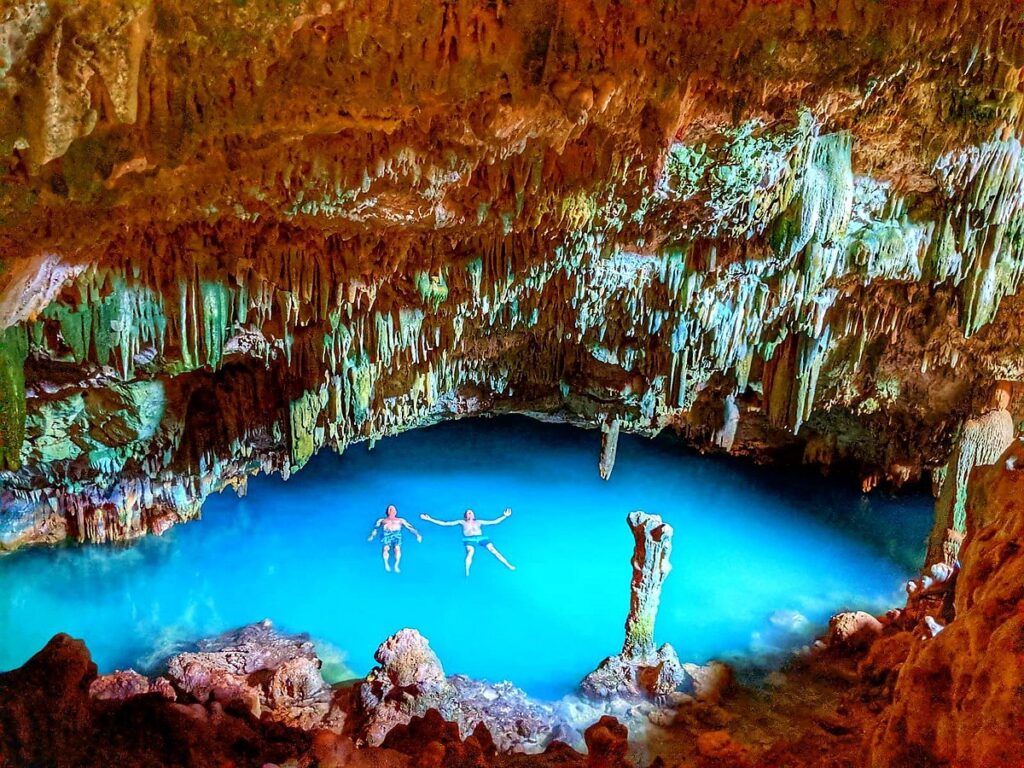
The Rangko cave, also known as Goa Rangko, is a small but beautiful cave in Rangko village, close to Labuan Bajo on Flores, Indonesia. The cave is known for its crystal-clear, turquoise water inside. Usually, the water has a pleasant temperature, so you can definitely take a swim in this natural pool.
The amount of minerals in the water even makes you float by yourself. At the right time of day the cave becomes even more magical, because the water seems to light up when the sun shines on the water inside the cave.
The Rangko cave is a hidden gem, not far from Labuan Bajo on the island of Flores. Inside this beautiful limestone cave, you can float in the clear blue water while enjoying the mysterious silence of the cave. It is a very unique experience and a must-do if you are exploring Labuan Bajo. In this blog post, you can read everything you need to know about visiting the Rangko Cave, Labuan Bajo.
6. Kelor Island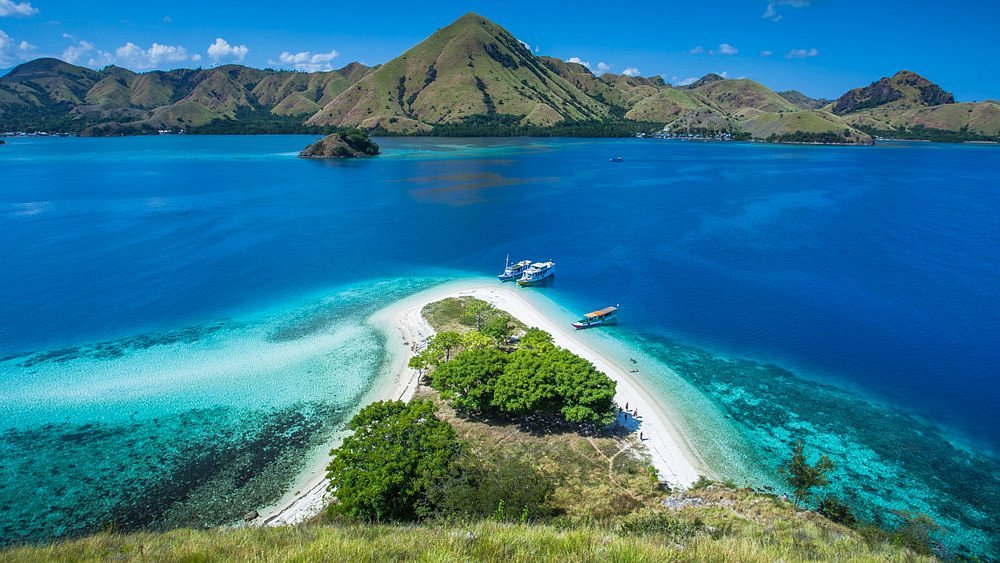
Kelor is a small island located in front of the the beautiful hills of Flores. It is one of the must do in the Komodo National Park as the view from the top of the island is simply breathtaking. A short hike of 15 minutes will lead you to the top where a panoramic view on Flores, Rinca Island and many other small islands. The perfect spot to take pictures and selfies. Two white sandy beaches are perfect to relax and swim around before going back to Labuan Bajo after a wonderful trip in the amazing Komodo National Park.
7. Manjarite Island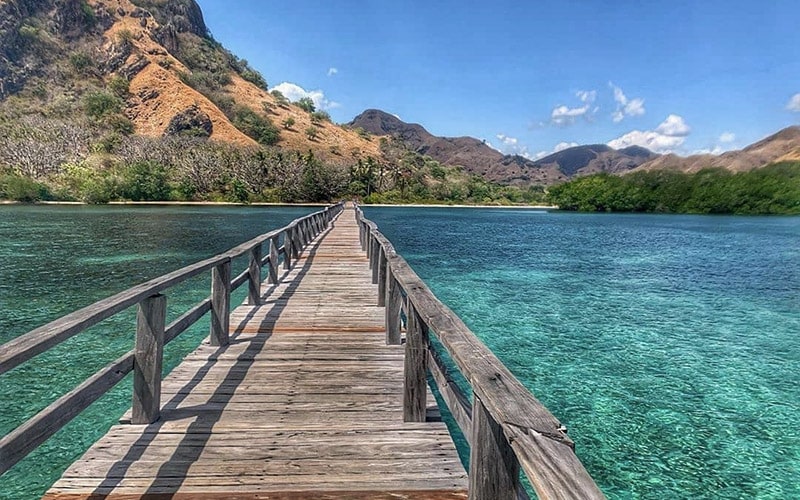
Manjarite Island: a secluded paradise of pristine beaches and vibrant marine life awaits. Explore crystal-clear waters, snorkel with colorful fish, and unwind on tranquil shores. Discover the beauty of untouched nature in this hidden gem of East Nusa Tenggara.
Located on the west side of Flores Island, Manjarite Beach is a hidden gem waiting to be explored. Accessible only by boat, travelers can embark on guided tours or charter their own vessels to reach this remote paradise, surrounded by the pristine waters of Komodo National Park.
Manjarite Beach stands out for its dense coral forests and vibrant marine life, offering snorkelers and divers an immersive experience like no other. Dive deep into the azure depths and encounter a myriad of sea creatures, from colorful clownfish to elusive blue ribbon eels.
While exploring the underwater wonders of Manjarite Beach, it’s essential to prioritize safety and environmental conservation. Snorkelers should remain vigilant of their surroundings, avoiding contact with fragile coral reefs and respecting the delicate ecosystem that thrives beneath the waves.
Beyond its scenic beauty, Manjarite Island holds a treasure trove of hidden secrets waiting to be discovered. From secluded coves to panoramic viewpoints, every corner of this pristine paradise invites exploration and promises unforgettable adventures.
As you wander through the untouched landscapes of Manjarite Island, you’ll encounter a myriad of hidden charms and natural wonders. Whether it’s the gentle rustle of palm trees or the mesmerizing dance of tropical fish, each moment spent on this secluded island is a testament to the beauty of nature
In conclusion, Manjarite Island stands as a testament to the enduring allure of nature’s untouched beauty. From its secluded shores to its vibrant underwater ecosystems, every aspect of this pristine paradise invites exploration and promises unforgettable adventures. So, pack your bags, set sail for adventure, and immerse yourself in the enchanting wonders of Manjarite Island.
8. Padar Island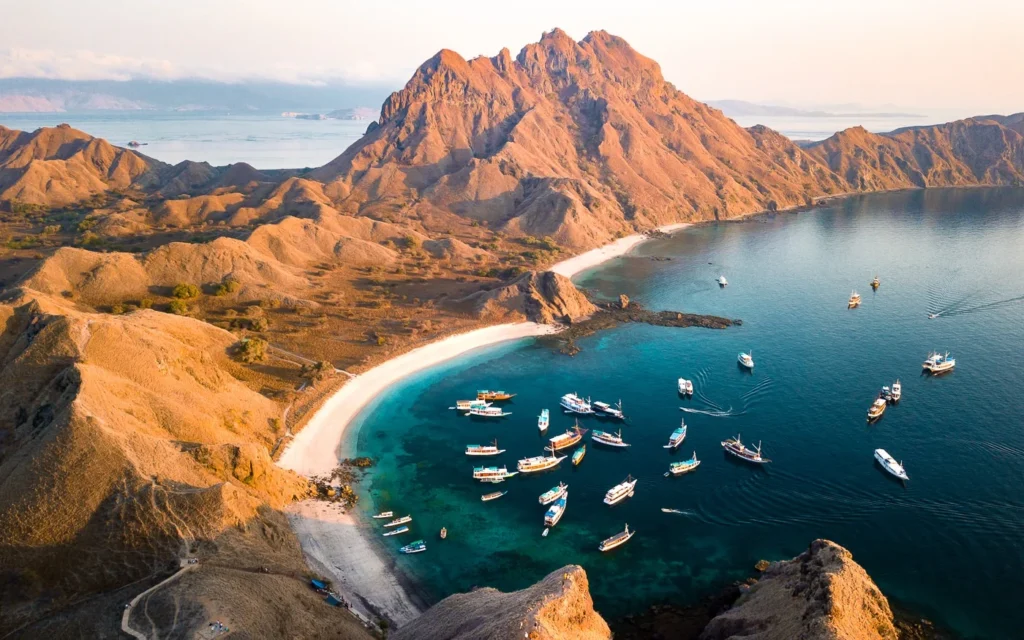
Padar Island, also known as Pada, is a small island located between the islands of Komodo and Rinca within Komodo archipelago, which is part of the West Manggarai Regency in East Nusa Tenggara, Indonesia. It is the third-largest island in Komodo National Park.
The Komodo archipelago is famous for Komodo dragons, giant lizards that can reach up to 3 metres (9.8 ft) in length. While the neighboring islands of Komodo and Rinca are home to these iconic lizards, Komodo dragons were once considered extinct on Padar. However, in 2004, the Komodo Survival Agency reported sightings of at least 12 individuals, including a hatchling, suggesting a possible resurgence of the dragons on Padar.
The island’s topography is rugged, with steep volcanic mountains and hills surrounded by deep bays. Padar has a dry climate, and its vegetation consists mainly of bushes and grasslands, creating a savanna-like landscape. The island features four deep bays with beaches of varying colors; most are white sand, while some have gray and pink sands. The waters around Padar are also known for several popular sites for scuba diving and snorkelling.
9. Kalong Island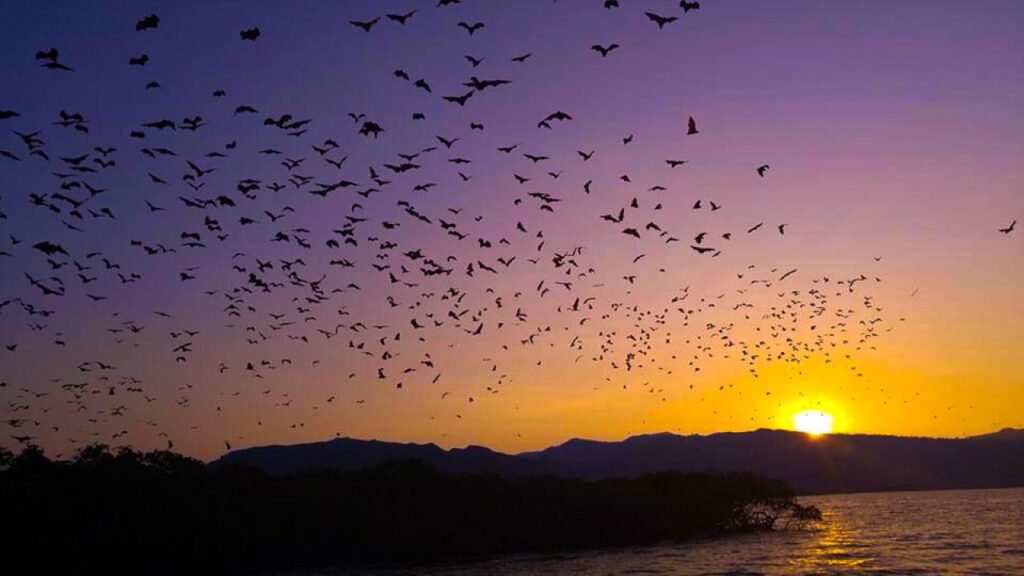
Kalong Island is named after its majority of occupants which are “Kalong” or the bat. Located just near Rinca Island or 8 kilometers from Labuan Bajo, there are thousands of bats living on this small island. Since the whole island is covered with mangrove forest, this island can be adored from distant only. The best time to visit Kalong Island is during the dusk as the bats are wonderfully flying in a big group and leaving for other neighboring islands to find food. This beautiful formation of flying bats can also be seen early in the morning as they go back to their homes. For its natural show, Kalong Island has become a popular and busy destination in Komodo National Park.