
Malang
Malang Regency, located in East Java, Indonesia, is the second largest regency in the region, encompassing a total area of 3,530.65 km² (2,193.84 mi²). The region possesses significant potential for agriculture, medicinal plants, and tourism.
The figures exclude the areas and populations of the two autonomous cities, Malang and Batu, which are geographically situated within the regency but are administratively independent. The town of Kepanjen serves as the capital of the regency.
The majority of the population is located in the Greater Malang (Malang Raya) region, which encompasses the cities of Malang and Batu, along with 21 additional districts within the regency and one neighboring district in Pasuruan Regency, situated in a valley between and south of the two cities. The distance from Malang to Batu is roughly 20 kilometers. The metropolitan area encompasses 1,200.43 km², with a population of 2,325,109 according to the 2010 census, resulting in a density of 1,936.9/km² (5,016/sq mile).
Historical and archaeological evidence from Hindu temples indicates that the Kanjuruhan Kingdom developed in the region during the 8th and 9th centuries. An inscription at the Dinoyo shrine in Badhut indicates that the shrine was inaugurated on Friday, Legi 1st, Margasirsa 682 Saka in the Javanese calendar, corresponding to November 28, 760 AD.
The Kanjuruhan kingdom was once governed by Akuwu Singhasari Ametung, who was wed to Ken Dedes. During that period, the Kingdom was governed by the Kingdom of Kediri, with the Singhasari Government Center located in Tumapel. Ken Arok’s assassination of Akuwu Ametung and subsequent marriage to Ken Dedes marked the transfer of control to the Malang Kingdom, following the defeat of the Kediri Kingdom. Singhasari subsequently controlled Kediri.
At its zenith, the Mataram Kingdom was dominated by both Mataram and the Majapahit Kingdom. The government relocated to Demak with the introduction of Islam, facilitated by the Wali Songo. Duke Ronggo Tohjiwo subsequently governed the government. During the period of collapse, folklore suggests that legendary heroes emerged in opposition to Raden Panji Pulongjiwo. He was apprehended by Mataram soldiers in the village currently known as Kepanjen Panggungrejo (Kepanji’s). The town’s destruction was referred to as Malang Kutho Bedhah.
During the period of the Dutch East India Company, Malang served as a base for the Trunojoyo resistance from 1674 to 1680 against the Mataram, which was supported by the Company. During the early nineteenth century, the government was led by the Governor-General. Raden Tumenggung Notodiningrat served as the inaugural Malang Regent. On 9 May 1820, the Dutch government appointed him by resolution of the Governor-General.
Since 1984, the Malang Regency Hall has hosted a traditional ceremony originating from the Kanjuruhan Kingdom, which encourages attendees to don traditional Malang costumes.
Candi Badut is a small Shivaite temple that dates to the 8th century. Observe the historic Dutch Reformed Church, the Gereja Katedral Jun. Experience luxury while contributing to a meaningful initiative by visiting Nuansa Fajar, an organization dedicated to training and employing blind masseurs from across Indonesia. Explore the ancient Singosari temples located in the vicinity of Malang. Visit the Kebun Wonasari tea estate to explore tea plantations, engage in tennis, or tour the mini zoo.
For those seeking adventure, it is advisable to engage a guide for a challenging hike up the dormant volcano, Gunung Arjuna. Mount Bromo and Mount Penanjakan are located 2.5 hours from Malang.The Tenggerese residing in this region are thought to be direct descendants of the Majapahit aristocracy. The annual Kesodo festival, referred to as Yadnya Kasada, is conducted to express gratitude to the Almighty for a successful harvest and to placate the deity of Mt Bromo.
1.Mount Bromo
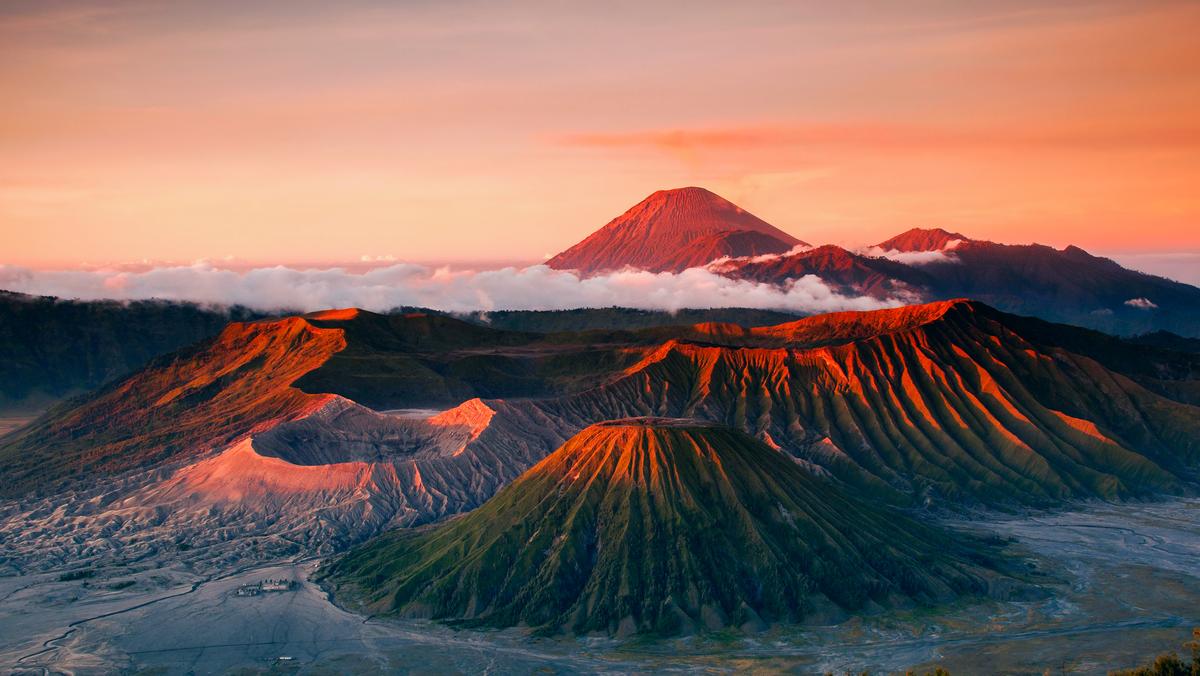
image source : unesco
Mount Bromo, in Indonesian as Gunung Bromo, is an active somma volcano, a site of Hindu pilgrimage, and is located within the Tengger mountains in East Java, Indonesia. With an elevation of 2,614 meters (8,576 ft), it is not the tallest peak of the massif; however, it is recognized as the most active and renowned. This region is among the most frequented tourist sites in East Java, with the volcano situated within the Bromo Tengger Semeru National Park.
Bromo derives from the Javanese pronunciation of Brahma, the Hindu deity associated with creation. An idol of Ganesha, the Hindu god of wisdom, is located at the mouth of the crater and is worshipped by Javanese Hindus.2 Mount Bromo is situated within a plain known as the “Sea of Sand” (Javanese: Segara Wedi or Indonesian: Lautan Pasir), a nature reserve that has been under protection since 1919.
Visiting Mount Bromo commonly occurs from the adjacent mountain village of Cemoro Lawang. It is feasible to reach the volcano on foot in approximately 45 minutes; alternatively, one may opt for an organized jeep tour, which includes a stop at the viewpoint of Mount Penanjakan (2,770 m or 9,090 ft) (Indonesian: Gunung Penanjakan). The viewpoints on Mount Penanjakan are accessible by foot for approximately two hours.
The Indonesian Center for Volcanology and Disaster Mitigation issues warnings against visiting Mount Bromo based on the level of volcanic activity.
Mount Batok is frequently confused with Mount Bromo because of its notable presence within the caldera and its location in front of the flatter Bromo crater, as seen from the widely visited viewpoints along the northern rim.
2. Museum Angkut

image source : radar batu
Museum Angkut, known in English as the Transportation Museum, is situated in Batu, East Java, Indonesia, on the slopes of Mount Panderman, which is part of the Kawi-Butak mountain range. The museum houses over 300 collections representing various forms of transportation, from traditional to modern. The museum comprises multiple zones, each featuring building models representative of continents including Asia, Europe, and America. Particularly in the European Zone, it is characterized by the French style of the 1800s to 1900s, featuring a range of vintage European automobiles. Museum Angkut is the inaugural museum dedicated to all types of transportation in Indonesia and Southeast Asia. Alongside vintage cars, a recent addition to transport collections is the Tucuxi electric car, owned by former Indonesian minister of BUMN and Jawa Pos Group owner, Dahlan Iskan.
3. Agro Kusuma Tourism
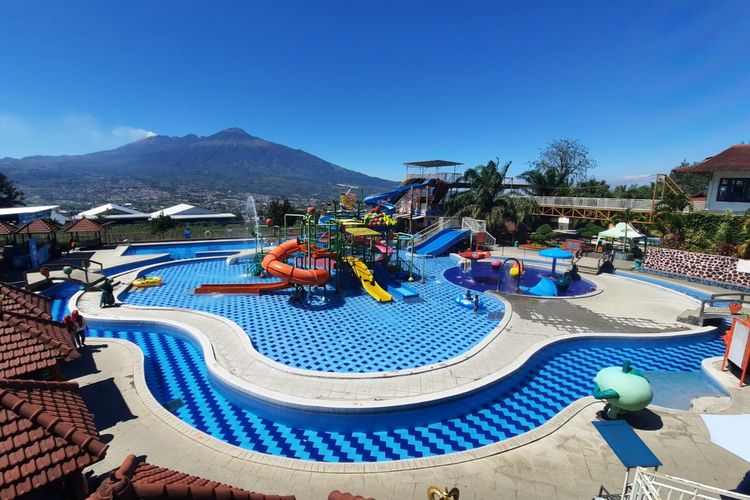
image source : kompas
Agro Kusuma tourism is situated in Ngaglik village, Batu district. A one-stop shopping service has been implemented at Agro Kusuma Tourism. A memorable experience awaits following visits to apple plantations, as well as to flower, coffee, strawberry, and hydroponically grown vegetables (pesticide-free).
Agro-tourism, facilitated by upscale accommodations, is situated on a 17-acre plantation. This tourism attraction enables visitors to harvest apples directly from trees. An intriguing activity was recently encountered in Agro Kusuma tourism. Apples and oranges are available for selection in the plantation area, where tasting is also permitted. Experience the freshness and health benefits of fruit directly from the tree.
The processes of drying coffee and purchasing perishable vegetables are observable. The expansive plantation facilitates activities such as jogging, bicycling, playground use, and horse riding. Additionally, it features a mini zoo, a camping area, and a swimming pool. Before departing from Kusuma Agro Batu, it is advisable to purchase souvenirs of its products, including jenang, apple vinegar, and orange. We are also able to enjoy various food products from Batu City, including apples, jamb, brem apples, and strawberries.
Agro Kusuma tourism features a mini zoo, greenhouse, bar, restaurant, coffee shop, heated swimming pool, badminton hall, tennis court, and volleyball field.
4. Tumpak Sewu Waterfall
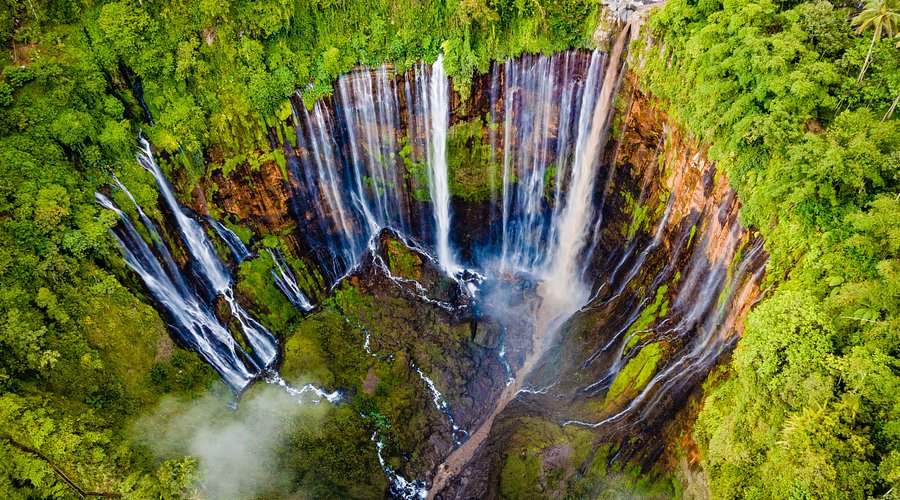
Tumpak Sewu Waterfall is one of the most beautiful waterfalls in Indonesia, located on the border of Lumajang and Malang Regencies, East Java. Due to its beauty, this waterfall is often nicknamed the “Niagara of Indonesia.” Meaning of the name: “Tumpak Sewu” comes from Javanese, meaning “a thousand waterfalls.” This name refers to the numerous streams of water that cascade simultaneously from a circular cliff approximately 120 meters high. The water originates from the Glidik River, which originates on the slopes of Mount Semeru. Located in Sidomulyo Village, Pronojiwo District, Lumajang Regency. Access to this waterfall is possible from either the Lumajang or Malang side.
You can enjoy the view of the waterfall from a height at the observation post.
From here, you’ll see a magnificent panorama of the waterfall with Mount Semeru in the background. Trekking to the base of the waterfall: For those who are adventurous, you can descend the cliff to see the waterfall up close. This journey is quite challenging and takes around 45-60 minutes. Below, you’ll experience the splashing water and the incredible roar of the waterfall.
If you’re planning to visit Bromo Tengger Semeru National Park, you can combine a visit to Tumpak Sewu with it, as it’s not too far away. The journey from Bromo to Tumpak Sewu takes around 2.5-5 hours, depending on the route.
5. Teras Semeru
Teras Semeru is located in Seriti, Sumberurip, Pronojiwo District, Lumajang Regency, East Java. The area is surrounded by restaurants and food stalls offering a varied menu. Teras Semeru can be reached by two-wheeled or four-wheeled vehicles. It’s also easy to find, nestled amidst vast rice paddies.
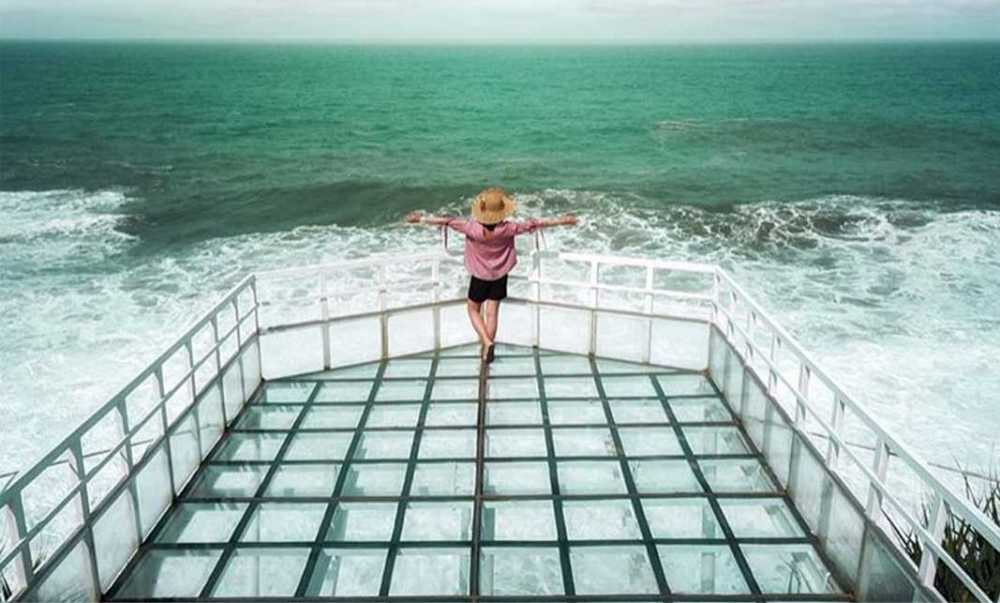
Teras Semeru is known as a popular tourist destination offering a beautiful panorama of Mount Semeru without having to climb to the summit. It’s also renowned as the best spot to enjoy the natural beauty of Semeru.
This tourist spot offers a prime location for a direct view of Mount Semeru. It’s safe for everyone, including those with no climbing experience.
Furthermore, Teras Semeru is a popular destination for photographers, especially those seeking to capture the majesty of Mount Semeru and its surroundings. The roads surrounding this tourist spot are pristine, making it a popular photo spot for tourists. This tourist spot is often included in Mount Bromo vacation packages. The surrounding scenery is renowned for its beauty and offers a captivating spot for visitors to enjoy.
The Semeru Terrace offers a captivating natural view directly overlooking Mount Semeru. Visitors can enjoy the beauty of Semeru against a backdrop of blue skies or a thin mist surrounding it. This tourist spot is quite popular at sunrise or sunset, offering even more stunning views. Furthermore, the air around the terrace remains cool and pristine, typical of mountainous regions. Surrounding the area is a stretch of greenery, making the scenery even more memorable. This spot is perfect for relaxing with family and friends while enjoying the scenery. Furthermore, the facilities on site are comprehensive, including gazebos, seating areas, and a snack bar. During the flower season, there’s a beautiful flower garden area to enjoy.
6. Coban Rondo Waterfall
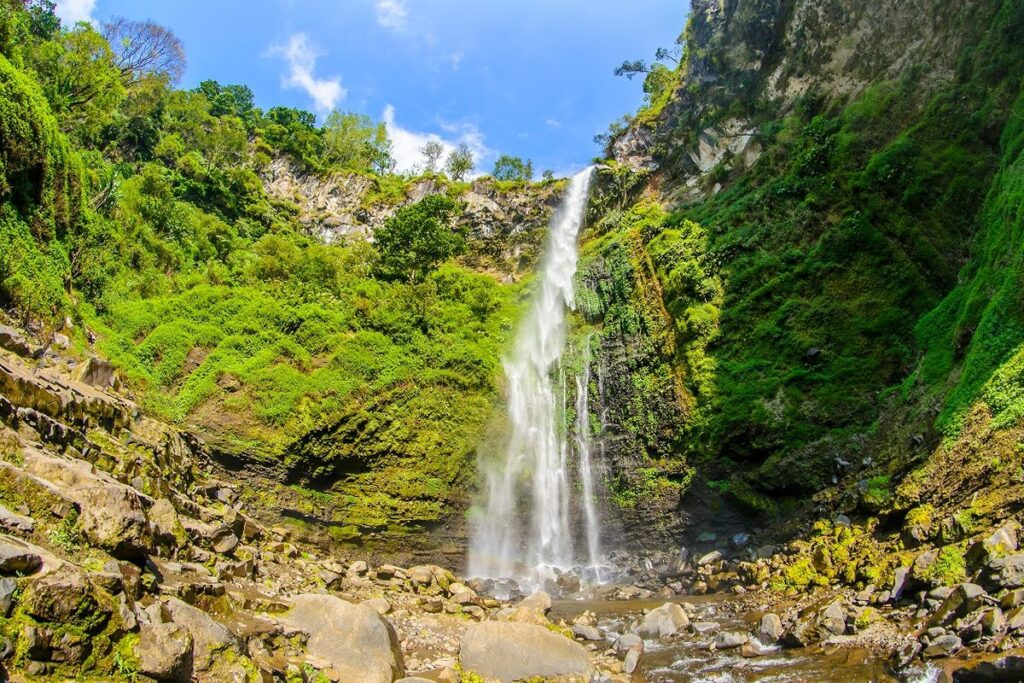
Located in Pandensari Village, Pujon District, this 84-meter-tall waterfall is surrounded by lush pine forests and cool mountain air, making it a perfect escape from the city buzz. It’s super easy to get to. From the heart of Malang City, you can reach Coban Rondo in about 30 minutes by car. If you’re coming from Batu, it’s just a short 12 km drive away – perfect for a quick day trip. Coban Rondo Waterfall is more than just a scenic spot – it’s a piece of East Java’s cultural and natural heritage. Whether you’re drawn by the romantic (and tragic) legend or simply want to breathe in fresh mountain air, this waterfall offers the perfect mix of adventure and relaxation.
7. Madakaripura Waterfall

source : curracted travelist
Madakaripura waterfall is located in Sapih, Branggah, Lumbang, Probolinggo, East Java. It is in the Tengger Semeru National Park. The closest major city to this location would be Surabaya or Malang. The Madakaripura Malang journey is approximately 120 km and the Madakaripura Surabaya trip is approximately 116 km. This makes it a great stop on your way to Bromo Tengger Semeru National Park from Surabaya.
Hidden in a lush valley not far from Mount Bromo, Madakaripura Waterfall is one of East Java’s most awe-inspiring natural spots. Towering at around 200 meters and surrounded by high cliffs, It holds the title of the tallest waterfall in Java and the second highest in Indonesia.
This waterfall creates a dramatic, misty curtain that feels like stepping into another world. While it remains under the radar compared to Bromo. those who make the journey are rewarded with a peaceful and unforgettable experience.
Madakaripura is more accessible and easier to fit into a typical East Java itinerary—especially if you’re already heading to Mount Bromo. The walk is shorter, the landscape more enclosed, and the atmosphere quieter and more meditative. The best time to visit is in the morning during the dry season (between May and September), when the weather is more stable and the water flow is safer. Avoid visiting during or just after heavy rain, as the water flowing from above can become dangerously strong.
8. Balekambang Beach
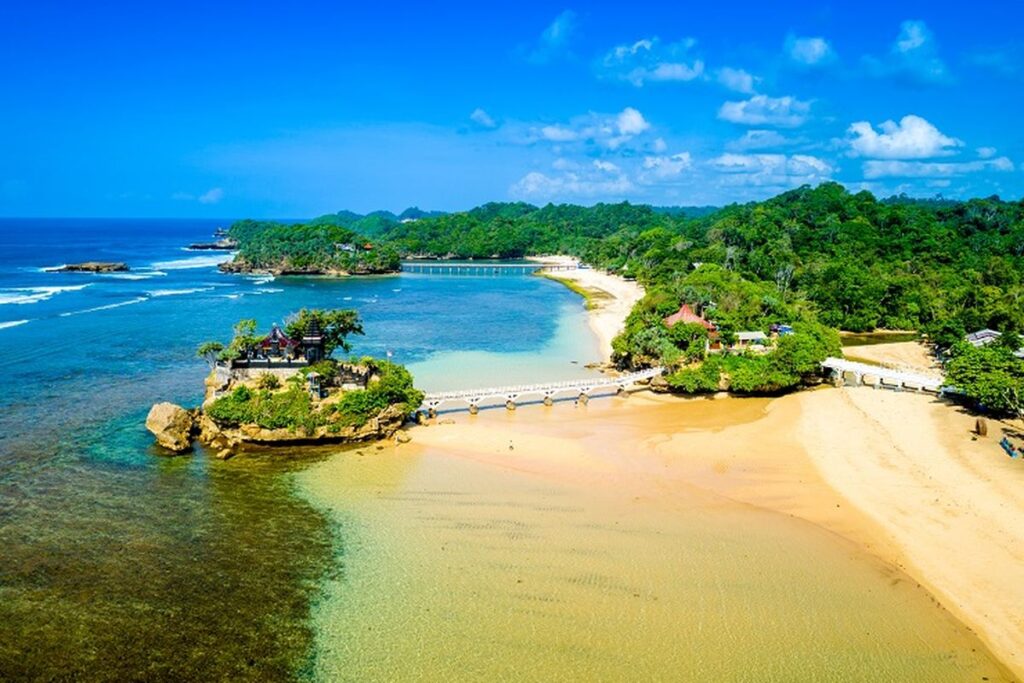
The beach possessing three islands with distance of about one hundred meters each, two of which have been connected with one meter-wide bridge to the shore, Balekambang offers a different atmosphere of beach resorts in the Southern part of Malang. One of the three islands called Ismoyo island has a Hindu temple, established by local Hinduists. Annually, the ritual and traditional ceremonies Jalanidhipuja (Hindu ceremony) and Suran (Javanese New Year ceremony) are held here every year. The parking area, stalls, inns, souvenir shops, and the others tourism facilities has provided for the visitors. This beautiful beach is located at Srigonco village, Bantur district, about 57 km away to the south from Malang and accessible by public transportation.
9. Goa China Beach
source : indonesia kaya
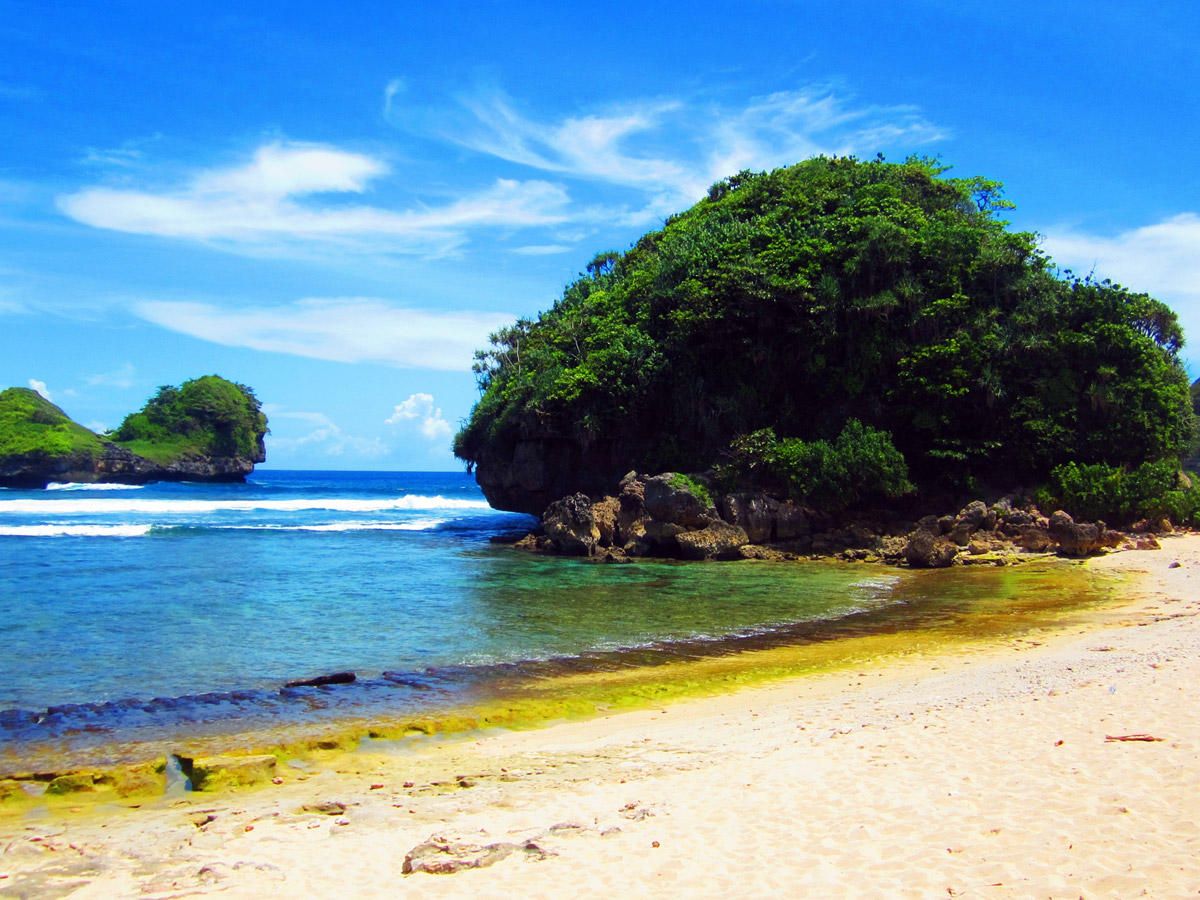
Goa China Beach and it resides in Sumbermanjing Wetan Sub-District. To be exact, the beach is located in Sitiarjo Village. Actually, the original name is Rowo Indah Beach. In the past, not many tourists know much about it in fact. However, more people start recognizing the beauty after seeing some photos on the social media sites. The publicity makes the beach more famous over time, without a doubt!
It is true Malang City has lots of south beaches that tourists can visit regardless of the time. The question is what makes Goa China Beach different than others. One of the best allure is the fiercer waves! It is because the beach connects directly to the Indian Ocean. Due to this fact, tourists should avoid swimming and do other types of water sports carelessly there. As an alternative, visitors can take advantage of the soothing sunrise in the morning! Not to mention a mysterious cave resides near to the shoreline where tourists can explore! What is more? Do not forget the presence of three small islands located nearby called Nyonya, Goa Cina, and Bantengan Island.
Goa China Beach has tons of interesting allures for tourists to enjoy during the visit. Here is an example. Not only the beach offers stunning sea panoramas, but it also has an easy accessibility. The location is near to Sendang Biru and Bajul Mati Beach, so tourists can explore several beaches in one day! Still, the most interesting allure is the presence of a mysterious cave located in the shoreline. It is said the depth is 8 meters and the cave has the height of 2 meters. That means everyone is able to enter the cave easily.
After visiting the cave and explore the shoreline, tourists should hear further information regarding the site. It is said, 20 years ago, a monk came to the beach and conducted a hermitage in the cave. He spent the rest of his life in the cave and died on the site. The locals found only several bones and old Mandarin letters inside the cave later. For further information regarding this story, tourists should talk to the elders or local guide though.
Even though the sea looks stunning and alluring, no one is allowed to get in the water and swim in it. The reason is none other than the big waves and strong current. In fact, due to the fierce wind, local fishermen would avoid working in that area.
10. Watu Leter Beach
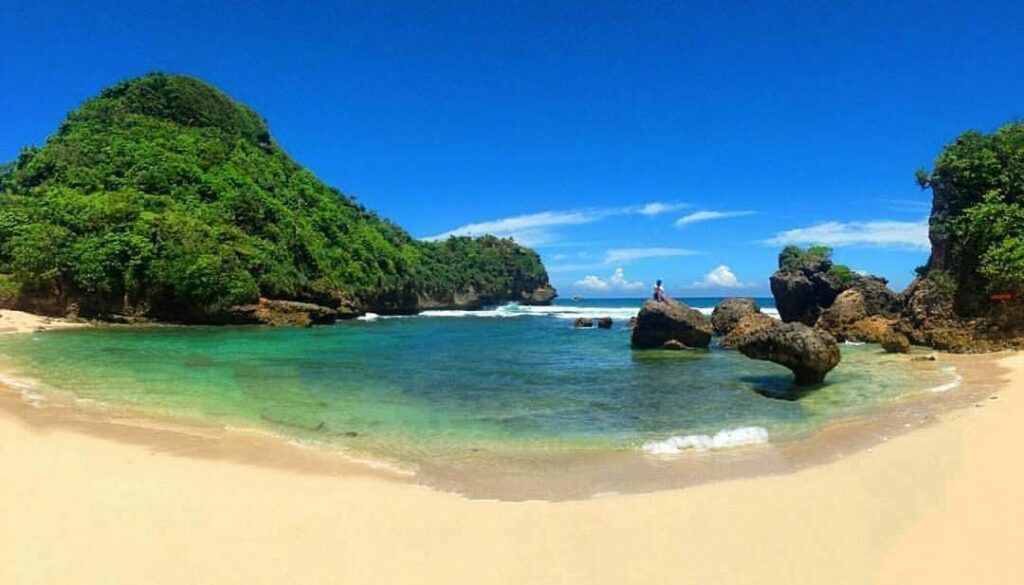
Watu Leter Beach. The location is in Sitiarjo Village and it belongs to Sumbermanjing Sub-District. It is true a trip to Watu Leter takes some time, but the reward is quite satisfying. Both the serene nuance and stunning panorama makes the beach is worth a visit, without a doubt.
Watu Leter Beach is definitely stunning. The first thing that tourists may notice is the clean and neat environment. That means tourists won’t find any trash once they arrive on the site. For the information, the color of the shoreline is light brown or caramel. Even the texture is quite soft. Even though Watu Leter is part of the Indian Ocean (which is famous for the big waves), it has the landscape which is similar to a cape. Big coral reefs also protect the beach from big waves. No wonder, tourists can swim in safe and comfortable manner there. Moreover, the seawater has crystal light blue color.
It is true a trip to Watu Leter Beach may take some time and efforts, but it would be worth the time. Once tourists arrive at the location, all the tiredness gets away and the efforts are all paid off. The serene nuance of the beach even soothes visitors and relieves stresses right away. Unlike Goa Cina Beach with its many visitors, Watu Leter is considered more suitable for relaxation due to the peaceful atmosphere.
The next feature that makes Watu Leter special is the presence of big corals, which are located in the midst of the shore. In fact, the locals gave the name to the beach due to the presence of those stunning coral reefs. Actually, villagers call them Leler or Leter, which means plain. No wonder, tourists won’t miss the chance to take photos of those corals and other beautiful objects that they can find in the beach.
Watu Leter Beach is known for its sea turtles. According to the locals, many sea turtles often come ashore to lay eggs. If tourists come at the right time, they might be able to witness such natural phenomenon! Also, the locals may release small gray sea turtles to the sea at a specific time. Once again, tourists must find the schedule if they want to watch the event directly.
11. Asmara Bay Beach
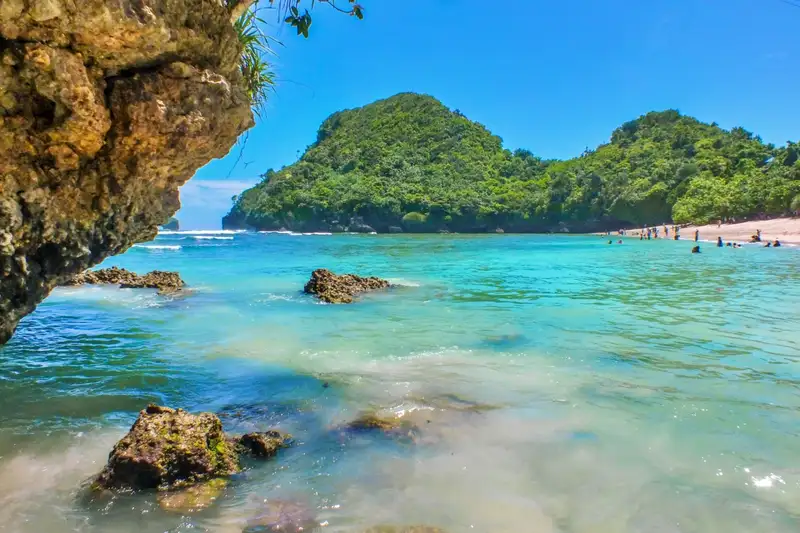
Teluk Asmara Beach, also known as Asmara Bay Beach, is a hidden paradise located in the southern coastal region of Malang Regency, East Java. This pristine beach offers a romantic escape from the hustle and bustle of city life, boasting unspoiled natural beauty and a serene atmosphere.
Situated in the Tambak Village, Sumbermanjing Wetan District, Teluk Asmara Beach is surrounded by lush greenery and offers breathtaking views of the Indian Ocean. The beach’s secluded location adds to its charm, providing a sense of peace and tranquility.
Teluk Asmara Beach is renowned for its soft white sands, crystal-clear waters, and gentle waves. The beach is perfect for leisurely strolls, sunbathing, swimming, or simply relaxing and enjoying the serene surroundings.
One of the unique features of Teluk Asmara Beach is its heart-shaped bay, which can be best seen from a nearby hilltop. This natural phenomenon adds to the romantic ambiance of the beach, making it a popular destination for couples and honeymooners.
The untouched natural beauty of Teluk Asmara Beach makes it an ideal destination for nature lovers and those seeking a peaceful retreat. You can unwind under the shade of the trees, enjoy a picnic with family and friends, or explore the nearby coastal areas.
Teluk Asmara Beach also offers stunning sunset views, painting the sky with vibrant colors, creating a magical and unforgettable experience. If you’re looking for a romantic and unspoiled beach in Malang, Teluk Asmara Beach is the perfect choice. Come and experience the beauty of this hidden paradise and create unforgettable memories.